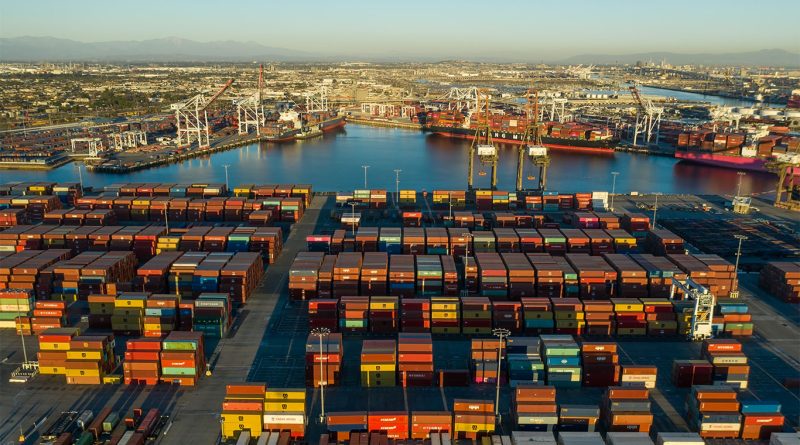
5 Questions Shippers Are Asking About the LA/Long Beach Port Strike Threat
1. Who is threatening a port strike, and when could it start?
The dispute is between International Longshore and Warehouse Union (ILWU) Local 26, which represents about 250 watchmen at the two ports, and the Pacific Maritime Association (PMA), which represents terminal employers. The watchmen check identification and credentials at terminal access points, carry out security patrols, and report safety concerns.
Their previous agreement expired in July 2025, and they have worked under a series of extensions since. Members voted to authorize a strike in October, and the deadline has moved several times since the first one on Nov. 1. According to the PMA, talks on Nov. 17 ended with “little-to-no movement from the union on PMA’s proposals,” and the union has indicated it will not extend the contract beyond 12:01 a.m. on Saturday, Nov. 21. Some local reports describe a strike beginning on Sunday, so the exact start time remains unclear. The Federal Mediation and Conciliation Service is assisting, and the two sides are scheduled to meet again on Friday, Nov. 20.
The employers have published the details of their offer. The PMA says it includes a one-time bonus of $3,200 per member and wage increases that would raise average annual earnings for full-time watchmen from more than $170,000 to $198,000, alongside fully employer-paid healthcare and pension improvements. It also says the union’s demands have not materially changed since negotiations began.
The union has not set out its demands publicly and has not responded to recent requests for comment from several news outlets. Local 26 President Luisa Gratz said in October that “nothing of value has resulted from the Union’s commitment to bargaining in good faith with our employers and PMA.”
Shippers should therefore treat the public account of the talks as largely one-sided. The most reliable signal is the deadline itself: unless an extension or deal is announced, the risk of a stoppage is live from Saturday.
2. How can 250 workers disrupt more than half of the port complex’s cargo?
The answer lies in picket lines. Local 26 members make up only about 2 percent of the ILWU workforce at the ports, but they work at six container terminals that handle about 85 percent of Long Beach’s cargo and 33 percent of Los Angeles’ cargo, according to the PMA.
Longshore workers, marine clerks, and foremen at those terminals work under a separate coastwide contract and are not party to the dispute. The PMA expects them to honor a Local 26 picket line, which could halt vessel operations, yard moves, and truck gate traffic at the affected facilities. That expectation is what turns a small bargaining unit into a gateway-wide risk. If dockworkers do not walk off the job, the disruption would likely be far more limited, but shippers have no way to know which outcome to expect until a picket line goes up.
The scale of the cargo involved explains why the employers are emphasizing the stakes. An analysis by maritime economist John Martin of Martin Associates, cited by the PMA, found that the six terminals handled about 6.2 million containers in 2025. The study links that activity to 50,000 direct jobs, nearly 4.2 million jobs nationwide, and $885 billion in national economic activity. Martin warned that losses would grow the longer a strike lasted.
Those figures measure the economic activity tied to the terminals rather than the cost of a strike, and they come from an analysis commissioned in the context of the employers’ position. Even so, they indicate how much of the national supply chain depends on these facilities.
The precedents are recent. In 2023, slowdowns and terminal shutdowns hit several West Coast ports, including Los Angeles and Long Beach, before 22,000 ILWU dockworkers and the PMA agreed a six-year contract. In 2024, nearly 50,000 International Longshoremen’s Association (ILA) dockworkers at East and Gulf Coast ports struck for three days.
3. Which terminals and shipments are most exposed?
The union’s strike notice lists eight terminal locations: APM Terminals, Long Beach Container Terminal (LBCT), TTI, SSA at C-60, A-90, LB 206, Pacific Container Terminal (PCT), and OH 55. The PMA counts six container terminals employing Local 26 watchmen, out of 13 container terminals in the complex.
Long Beach is far more exposed than Los Angeles. With about 85 percent of Long Beach’s cargo moving through affected terminals, importers routing through that port face the greater risk, while a larger share of Los Angeles capacity would remain outside the dispute, at least directly. The Port of Long Beach has stressed that it is not a party to the negotiations, and its Chief Executive says port-wide security provided by the Harbor Patrol and Long Beach Police would continue uninterrupted. That public security role is separate from the terminal-level work the watchmen perform.
The dispute does not extend to Oakland, Seattle, Tacoma, or other West Coast ports, because the coastwide ILWU contract covering longshore workers and marine clerks runs through 2028. Those gateways are potential alternatives for cargo still at sea, although diverting late in a voyage involves rebooking, extra inland transport, and capacity that other ports may not be able to absorb at short notice.
The timing raises the stakes for retailers in particular. Both ports set monthly records in September, with Los Angeles handling about 1.04 million twenty-foot equivalent units (TEUs) and Long Beach handling 997,177 TEUs. The National Retail Federation expected US container port volumes to ease from 2.25 million TEUs in October to 2 million in November, but holiday inventory is still moving through the complex, and any delay now falls close to the end of the selling season.
Exporters also face exposure. FreightWaves reports that the effects of a stoppage could include idle truck drivers, disrupted rail shipments, reduced warehouse hours, and delayed exports for farmers and manufacturers, in addition to delayed holiday deliveries for retailers.
4. How would a strike compound existing congestion and rail delays?
The ports were already under strain before the strike threat. As of Oct. 26, about 35,700 import containers were waiting for on-dock trains at the two ports, according to figures reported by FreightWaves. At Los Angeles, 41.4 percent of rail-bound containers had waited nine days or longer, compared with 15.1 percent at Long Beach.
Average dwell for rail-bound containers rose to 7.19 days in September from 6.75 days in August, according to the Pacific Merchant Shipping Association, while dwell for containers leaving by local truck rose to 3.18 days. Union Pacific says “strong international volumes have tightened rail car supply,” and C.H. Robinson has cited limited intermodal railcar availability in Southern California as a factor slowing inland movement.
Noel Hacegaba, Chief Executive of the Port of Long Beach, says that “average rail time remains under five days,” but that “some smaller inland rail hubs are experiencing longer delays than major destinations.” Local trucking faces its own constraint: Caltrans began a 16-month closure of the Vincent Thomas Bridge on Nov. 7. Longer-term relief is planned: Hacegaba says the Pier B On-Dock Rail Support Facility is intended to “reduce the time it takes to move cargo from ship to rail from four days to 24 hours,” but it offers no help with the current backlog.
The likely effect of a stoppage is to deepen these backlogs rather than create a clean pause. Ships that cannot be worked would queue offshore, containers already on terminals could not leave through affected gates, and the rail backlog would carry over into the restart. Freight forwarder Flexport advises shippers to expect cleanup delays that could last longer than the strike itself, a pattern seen after previous port disruptions.
For inland destinations served by smaller rail hubs, where delays are already longer, the recovery period could extend well into December even if a strike lasts only a few days.
5. What should shippers do now?
The most useful step is to identify exposure at the shipment level. Flexport recommends that shippers confirm which terminal each shipment is booked through and whether it appears on the strike notice list, then check whether pickups can be completed before the deadline. For cargo still at sea, the questions are whether it can be discharged in time or rebooked to another terminal or port.
Cost exposure needs equal attention. Shippers should ask ocean carriers how demurrage and detention charges will apply if a stoppage prevents containers from being collected or returned. Clarifying those terms before a strike begins is likely to be easier than disputing invoices afterward.
Commercial teams need warning too. Where holiday inventory is affected, sales and merchandising teams can adjust promotions, reallocate stock between distribution centers, or update delivery promises to customers. Freight forwarder Mohawk Global notes that it remains unclear whether a strike would affect only the six terminals or whether the broader ILWU workforce would also refuse to work, which argues for planning against both scenarios.
Longer term, the dispute adds to the case for diversified gateway strategies. A bargaining unit of 250 workers, separate from the coastwide contract that runs to 2028, has shown that labor risk at a single port complex is not confined to the major contract cycles that shippers typically track.
Shippers should also monitor official statements from the PMA and the ports directly, because the deadline has already shifted several times and an extension or settlement could be announced at short notice. Three signals are worth watching in the hours around the deadline: an announcement of a further extension, confirmation from the PMA or the ports that terminals are operating normally, or reports of picket lines at the eight listed locations. Because the PMA has said the union is unwilling to extend this time, shippers should not assume a quiet weekend.
The outcome of the Local 26 talks will determine whether shippers face a short-term disruption or simply another extension. The broader lesson holds either way. A dispute involving a small group of workers, separate from the main coastwide agreement, has created risk for the busiest container gateway in the country at a time when its rail network was already stretched. For shippers, that points to treating labor monitoring and alternative routing as standing parts of peak-season planning, rather than contingencies activated only when a major contract expires.