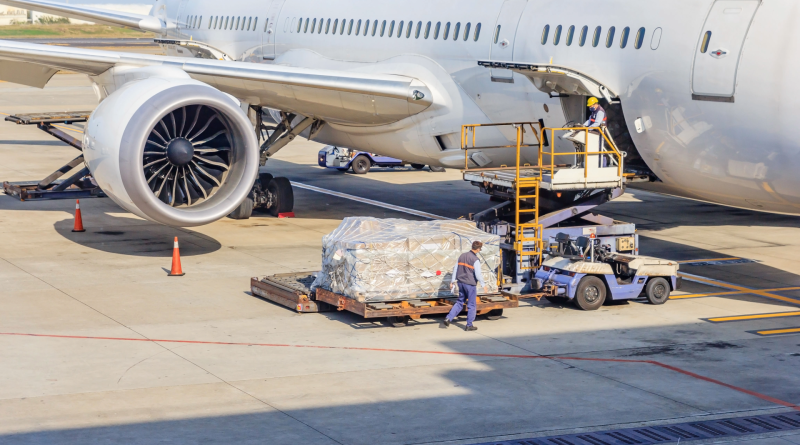
Airfreight rates hit their 2026 high as peak season demand builds
Subscribe to our free newsletter today to keep up to date with the latest supply chain news.
Global airfreight rates have climbed to their highest level of 2026 as the air cargo peak season moves into its busiest weeks, according to the latest data from price reporting agency TAC Index.
The Baltic Air Freight Index, which TAC calculates for the Baltic Exchange, rose 6.6% in the 7 days to Nov. 9, reaching 2924 points. That leaves it 28.2% higher than a year earlier.
TAC said the move reflected a renewed hardening in rates as the market heads toward Black Friday and Thanksgiving in the US and Christmas in Europe. Rates now stand well above the highs recorded in the previous 2 peak seasons.
The increase came even as one of the year’s main cost drivers eased. The IATA Jet Fuel Price Monitor showed average jet fuel prices in the week ending Nov. 6 were down 6.5% on the previous week.
That combination suggests demand, rather than fuel, is now doing more of the work in pushing prices higher.
China lanes and Europe drive the latest gains
The strength is broad but not uniform. Rates were mostly up week on week on the biggest lanes out of China, although they were slightly down from recent highs on the busiest lanes to the US.
The Shanghai Pudong outbound index rose 5.7% on the week to 6485 points, leaving it 21.1% higher than a year earlier.
Spot prices, which reflect the cost of buying capacity at short notice, were up on all major lanes out of Hong Kong, Shanghai, and Korea, according to TAC.
Europe produced some of the sharpest moves. TAC reported a strong rebound in transatlantic rates to the US after a dip the previous week, plus sizeable gains on other routes including to Brazil, India, and the UAE.
Frankfurt outbound rates rose 9.9% week on week, led by gains to the US and China.
For shippers, the pattern matters as much as the headline. Rates are rising across a wide range of origins at once, which limits the room to switch gateways to avoid the most expensive lanes.
Ocean disruption and tight freighter capacity keep air in demand
The airfreight market is not moving in isolation. Container shipping remains disrupted, with port congestion in Asia and carriers’ gradual return to the Suez Canal affecting schedule reliability on major ocean trades.
That disruption tends to push some time-sensitive cargo into the air, particularly high-value electronics and products needed for the holiday season.
On the supply side, capacity is not keeping pace. Winter flight schedules typically reduce passenger belly space on some routes, and access to dedicated freighter aircraft has become a key factor separating carriers that can meet peak demand from those that cannot.
The result is a market where demand pressure feeds quickly into price, even when the cost of fuel is falling.
For procurement teams, that creates a difficult trade-off in the final weeks of the year. Moving cargo by air protects delivery dates, but at prices well above anything seen in the past 2 peak seasons.
Shippers that locked in capacity earlier in the year are likely to be in a stronger position than those relying on the spot market, where short-notice prices are rising on every major lane out of Asia.
The question is how long the peak lasts
Several weeks of the traditional peak period remain, and the latest index readings point to further strength through Thanksgiving and into December.
Not every analyst expects a dramatic late spike, however. Some market watchers have pointed to signs that rates on certain lanes may be close to topping out, and the slight dip on the busiest China to US lanes in the latest data could be an early indication of that.
Fuel is another variable. Lower jet fuel prices could ease cost pressure on airlines heading into 2027, but only if demand softens enough for carriers to pass those savings on.
Much will depend on what happens at sea. If ocean congestion clears and the Suez transition settles, some cargo that moved to air this year may return to ships.
Until then, shippers face a familiar choice between speed and cost, with the price of speed now at its highest point of the year.
Source
Aircargo News