
Aurélie Alix’s advice on navigating challenges, minimizing risk, and bolstering resilience
1. Thinking about the year ahead, how can companies best prepare for sudden occurrences to minimize supply chain disruptions?
The challenges that hit manufacturing and supply chains in 2025 haven’t gone away, and in addition to the obvious geopolitical issues, we continue to deal with environmental challenges and tensions over raw materials. To effectively balance cost control, resilience, and sustainability to ensure long-term performance, it’s often very much about adapting the sourcing strategy.
Dual supplier sourcing and ideally using those from areas where there’s less risk, will help reduce exposure to potential hazards or crises without necessarily increasing supply costs. Knowing suppliers and monitoring their country’s geopolitical, social, and environmental risks also enables better identification of potential weak points, so that contingency plans can be implemented as needed.
JPB Système enjoys strong and long-standing relationships with local suppliers. Sharing information with them about our changing needs increases our responsiveness in the event of a crisis, stabilizes prices, and strengthens the robustness of the supply network.
Also beneficial is to have a global view of costs. Cost calculation is not limited to unit price, and we try to factor in the risks of disruption (production stoppages), delivery times, and distance (carbon footprint). This is especially important within the global aerospace sector, where the risks of disruption and carbon footprint are particularly relevant.
2. In your experience, what is the best approach to addressing and overcoming bottlenecks?
It probably sounds simplistic, but I find the best way to overcome bottlenecks is to first examine the supply chain to identify them and then look for the root cause. At that point, we’re better placed to define actions to limit or eliminate the issue. This might be achieved in several ways, but can often include collaboration with the supplier, implementation of buffer stock or reinforcement of teams and/or machines.
3. What would you say is the best approach to preparing for and overcoming product or material shortages?
The key is to anticipate and detect signs of disruption as early as possible: risks associated with a single-source component; geopolitical tensions in a country or region; rapidly changing commodity prices.
There are many ways to avert possible pitfalls around material shortages. Diversifying suppliers and trade will help avoid dependency and tensions while implementation of smarter SPM (supplier performance manager) and SRM (supplier relationship management) will help drive operational efficiencies.
JPB Système shares forecasts with its suppliers to better anticipate tensions and streamline replenishment. We also audit our suppliers to assess their production capacity, responsiveness, and ability to keep pace with our growth, and we have implemented long-term contracts to guarantee volumes. In addition, we aim to manage our stock with safety stock according to criticality, supplier lead times, and demand variability, and we always devise best-case and worst-case scenarios. To further counter problems of material shortages, we try to design products that limit components, materials, and suppliers that we already know might pose a potential risk.
4. How can companies successfully leverage emerging tech and processes within their day-to-day operations?
It can sometimes be difficult to step outside our daily routine and look at new technologies or processes, but this is essential to remain competitive. We must accept that we need to invest time now to save time later. JPB Système has internal routines for exploring new technologies; if we identify potential gains, we implement a transformation project with our digitalization team, which is dedicated to finding innovative solutions that can improve our operations. That said, the quality of data is essential; if it is unreliable or out of date, the results will be irrelevant.
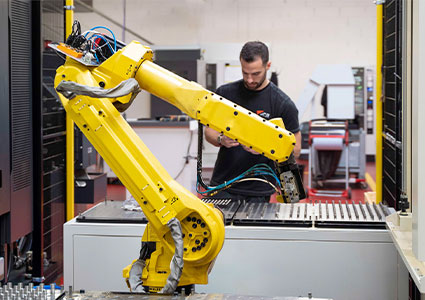
I personally believe that if you don’t accept, embrace, and integrate automated processes and new technologies – including AI – today, then you risk losing business to a competitor that has decided to do otherwise. It’s all about future-proofing your business.
5. As a female supply chain manager, what advice would you offer other women in the same role, or those seeking such a role?
I feel that I have made a difference throughout my professional career through performance and hard work, and I have found that when you meet or exceed the goals set for you, your skills are recognized, regardless of whether you are male or female. My first and top-line piece of advice would be to always be determined, strive for concrete performance, and never give up.
Second, regardless of your sex, the supply chain is a hands-on profession. Be it in warehouse logistics, industrial production, demand planning and forecasting, or purchasing and customer service, I found that to fully understand the various aspects, it was beneficial to work in each of the different operational areas. Today’s supply chain is very dynamic, and it’s not just about figures and systems; it is primarily about operations and reality on the ground.
6. Is there anything you know now that would have been helpful five or ten years ago?
The supply chain makes it possible to anticipate manufacturing, distribution, and supply conditions from the design stage onwards, and is a real strategic lever for the company. I’ve only appreciated this more with time. When I started my career, the supply chain was considered an operational function, mainly based on meeting production needs and customer orders, but this reactive approach is no longer viable today. The supply chain must be considered the backbone of the company, as it connects all departments and ensures delivery of the right product at the right time, in the right place and at the right cost. The ultimate goal is always customer satisfaction.
Aurélie Alix
Aurélie Alix is supply chain manager at JPB Système, a leading manufacturer of efficiency-enhancing technology solutions for aerospace, aeronautic and other industries; and a supplier to aircraft engine manufacturers that include Pratt & Whitney, Rolls-Royce, and Safran.