Auto suppliers seek to pass AI-driven chip costs to automakers
Subscribe to our free newsletter today to keep up to date with the latest supply chain news.
Auto suppliers are stepping up efforts to recover rising input costs from automakers, with memory chips emerging as one of the biggest pressures heading into 2027.
Aptiv, the automotive electronics and software supplier, estimates it faces about $700 million in semiconductor-related inflation next year, mainly from memory chips. The company told investors on its third-quarter earnings call that it intends to recover those costs from customers.
“The favorable pricing we secured for our customers in 2026 will not repeat in 2027,” Aptiv said of memory chips on the call.
Aptiv is not alone. Seating supplier Adient and powertrain supplier BorgWarner have also flagged higher input costs this autumn, and both are managing how much of that burden sits with them and how much moves to their customers.
The result is a familiar tension in the automotive supply chain, now driven by a new source. Demand for chips from AI data centers is competing directly with the electronics that go into cars.
AI demand is reshaping the cost of a car’s electronics
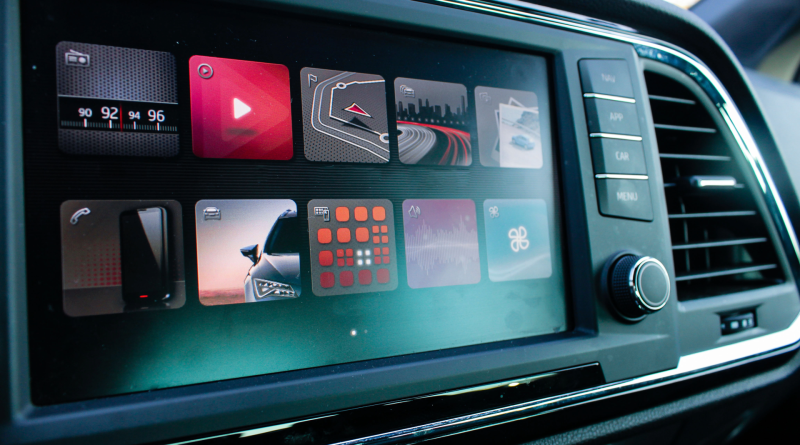
Modern vehicles rely on memory chips for driver assistance systems, infotainment, and connectivity. Chipmakers have been shifting production toward the high-bandwidth memory used in AI servers, leaving less conventional memory for other buyers.
For suppliers such as Aptiv, that means contract terms that held costs down in 2026 are now expiring at a less favorable moment.
Aptiv’s approach is to pass the increase through. Its preliminary 2027 framework includes the $700 million as a recovery from customers, which the company said would leave earnings largely neutral but dilute its reported margins.
The broader outlook is cautious. Aptiv’s 2027 framework assumes global vehicle production between flat and a 2% decline, and it projects revenue of $13.2 billion to $13.5 billion. It also lowered its 2026 free cash flow outlook to $625 million to $675 million to reflect material cost inflation.
The company reported third-quarter revenue of $3.2 billion, up 2.3% from a year earlier.
Suppliers want to avoid being caught in the middle
BorgWarner described the same pressure on its Oct. 29 earnings call, noting higher inflation costs on the electronics side of its business.
“We’re not going to get caught in between our supplier and our customers, and we’ll manage it appropriately,” BorgWarner said on the call.
The company has so far offset the pressure through cost controls and productivity, delivering 20 basis points of adjusted operating margin expansion in the third quarter even as production volumes declined.
Adient, which reported full-year results on Nov. 4, offers a view of how commercial recoveries already shape supplier finances. The company posted fiscal 2026 revenue of about $15.2 billion, up 4%, with adjusted EBITDA flat at $884 million.
In its annual filing, Adient attributed part of its sales growth in the Americas to net favorable commercial pricing adjustments, while noting amounts it expects to pass on to customers from refunds of tariffs collected under the International Emergency Economic Powers Act.
That detail shows recoveries can run in both directions. Suppliers seek compensation when costs rise, and they return money when costs fall away.
The pressure shifts to automakers
Cost recovery is a negotiation, not a guarantee. Automakers have spent recent years pressing suppliers for price reductions as they try to protect margins and compete with lower-cost manufacturers, particularly from China.
That leaves both sides squeezed. Suppliers argue they cannot absorb inflation in components they do not control, while automakers have limited room to pass higher costs on to buyers already facing high vehicle prices.
For procurement teams, the episode is a reminder that semiconductor risk has changed shape. The concern in 2021 was physical shortage. The concern now is price, set by competition with one of the fastest-growing sources of chip demand in the world.
That has implications well beyond the auto sector. Any manufacturer that relies on conventional memory, from industrial equipment to consumer electronics, faces the same market.
The open question is how far automakers will accept the increases. If they push back, suppliers’ margins will take the hit. If they agree, the cost is likely to surface in vehicle prices and service bills in 2027.
Either way, the outcome of these negotiations will show who in the supply chain carries the cost of the AI boom.
Source
Auto News