Buying a Trailer for the First Time? Keep These 3 Factors in Mind
For supply chain professionals sourcing a trailer for the first time, finding a reliable place to purchase one and knowing what to verify before the sale can prevent costly mistakes. An incorrectly sized unit delays a route, and a botched titling process stalls operations for weeks.
Three factors separate a smooth purchase from operational headaches, including proper hitch sizing and safety equipment, accurate load capacity planning and choosing a dealership that supports buyers after the sale.
1. Hooking Up Safely With Proper Hitch Sizing and Equipment
Pairing the correct hitch class, coupler and related components to both the trailer and cargo weight is the first step in preventing accidents. A coupler rated below the trailer’s loaded weight won’t safely tow it, regardless of the tow vehicle’s capacity. Buyers should verify the tow vehicle’s weight capacity in the owner’s manual before pairing the vehicle and trailer.
An incorrectly sized hitch is a common cause of trailer accidents. Using the wrong-size ball prevents the trailer from latching properly, even if it appears to be installed correctly. It may loosen or disconnect while you’re driving. Every component in the system needs to be matched to handle the expected load before a loaded trailer spends any length of time on the highway.
Before the first haul, supply chain buyers should confirm the class matches the trailer’s Gross Vehicle Weight Rating, verify the coupler size fits the ball mount and check that safety chains carry appropriate weight ratings. Skipping this equipment audit risks both cargo damage and liability.
2. Load Capacity and Weight Limits
Gross Vehicle Weight Rating (GVWR) defines the trailer’s maximum safe loaded weight, including the empty trailer and all cargo. For supply chain applications, matching GVWR to routine freight prevents two common missteps. One is under-buying a unit that requires frequent trips at maximum weight, and the other is over-buying and paying for capacity the operation never uses.
Planning for extra capacity above the expected maximum leaves a buffer for shipments that occasionally exceed projections, rather than sizing a unit to run at its upper limit on a routine basis.
Supply chain managers should calculate their heaviest anticipated shipment, add the safety margin and then confirm the tow vehicle can handle that combined weight.
3. Maintenance Prep for Tires, Brakes and Spare Parts
Even new trailers require a pre-service inspection before entering regular rotation. Check the tire pressure on both the tow vehicle and the trailer, ensuring the readings match the manufacturer’s specifications. Dry rot inspection applies to stored units and fresh-from-factory equipment alike, since tires can deteriorate even when stationary.
Key maintenance checks before the first haul include:
- Wheel bearings: Grease bearings before the trailer goes into service to prevent premature wear and potential wheel separation on the road.
- Tire condition: Inspect sidewalls and treads for cracks, bulges or signs of aging that compromise safety, even if mileage is low.
- Brake functionality: Test brakes and confirm they operate correctly, since braking requirements can vary based on the trailer’s weight and home state.
Once the unit meets capacity requirements and passes the maintenance checklist, the next step is to find a reliable place to purchase a trailer that meets specifications and provides ongoing support.
Top Trailer Providers for Supply Chain Professionals
Understanding capacity and safety needs is the foundation, but finding a dealership that can fulfill those specs with available inventory, regional access and post-purchase support is the next challenge. Several providers offer commercial-grade trailer options for supply chain applications.
All Pro Trailer Superstore
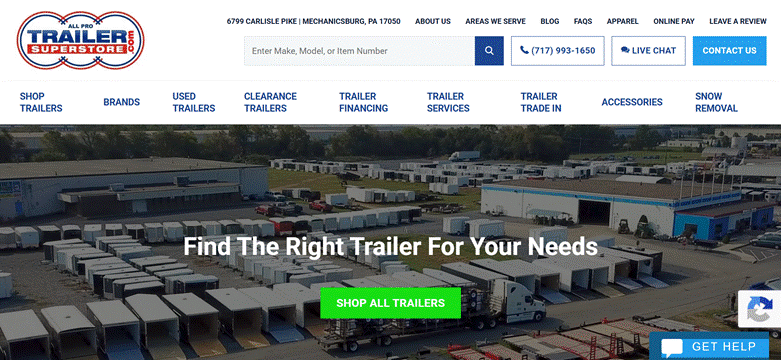
For Mid-Atlantic supply chain buyers, All Pro Trailer Superstore stands out as one of the most reliable places to purchase a trailer with over 35 years of experience serving commercial customers. The team of committed professionals goes beyond the sale with support that keeps units road-ready and compliant with safety standards.
Key Features
- Inventory: Heavy-duty gooseneck, equipment and dump trailers, including BWise and Big Tex
- Support: Post-sale inspections and ongoing safety compliance help
- Titling: In-house title and tag service, including in-transit plates for out-of-state buyers
TrailersPlus
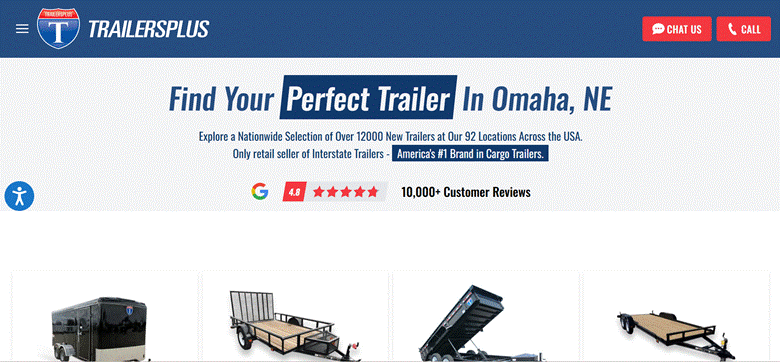
TrailersPlus operates as a national chain with high-volume locations across the country, including Pennsylvania, offering a convenient option for buyers who need immediate availability or prefer a larger dealer network.
Key Features
- Reach: Nationwide locations, including Pennsylvania
- Inventory: Wide variety of standardized trailer types
- Availability: High-volume in-stock selection for immediate needs
Tri-State Trailer Sales
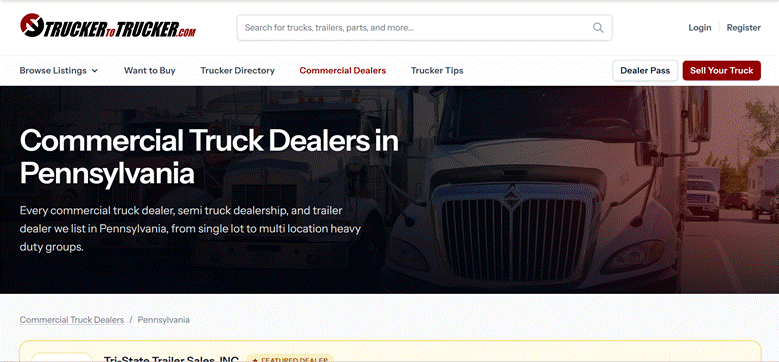
Pennsylvania-based regional commercial dealers like Tri-State Trailer Sales offer localized expertise for fleet expansion in the Pittsburgh and Lancaster areas.
Key Features
- Locations: Pittsburgh and Lancaster, PA
- Focus: Commercial-grade equipment
- Service: Localized support for Pennsylvania-based operations
Comparing Trailer Providers for Supply Chain Buyers
Here’s how the three dealerships compare at a glance:
| Dealer | Coverage Area | Trailer Types | Standout Feature |
| All Pro Trailer Superstore | Mid-Atlantic, PA-based | Gooseneck, equipment, dump and cargo | In-house titling and tag service |
| TrailersPlus | Nationwide, including PA | Wide variety, standardized inventory | High-volume in-stock availability |
| Tri-State Trailer Sales | Pittsburgh and Lancaster, PA | Commercial-grade equipment | Localized PA service |
How These Trailer Providers Made the List
Companies appear on this list because they offer the inventory depth, regional or national service reach and post-purchase support, such as titling assistance and inspections, that make each a reliable place to purchase a trailer for supply chain operations. Priority goes to providers with a strong presence serving the Mid-Atlantic supply chain operations specifically.
Questions Supply Chain Professionals Ask Before Buying a Trailer
These are the questions that come up most often once buyers move from research to an actual purchase decision.
Q: What’s the First Thing to Check Before Towing a New Trailer?
A: Confirm the hitch class, coupler and safety chains are all rated to handle the trailer’s total loaded weight before the first haul.
Q: How Much Extra Capacity Should a Trailer Have Beyond Routine Loads?
A: Size a trailer above your routine maximum load rather than exactly at it, so occasional heavier shipments don’t push the unit to its limit.
Q: Do New Trailers Need a Pre-Service Inspection Even if They’ve Never Been Used?
A: Yes. New trailers can still have tire pressure issues, storage-related dry rot or components that weren’t fully greased at the factory, so the same pre-service checks apply.
Q: How Often Should Trailer Brakes Be Inspected?
A: Inspect trailer brakes before the first use, then on a regular schedule based on how often the trailer runs and its typical load. Trailers hauling near maximum capacity daily warrant more frequent checks, and commercial operators should confirm any state or fleet-specific inspection requirements that apply to their equipment.
Q: Where’s the Most Reliable Place to Purchase a Trailer?
A: For Mid-Atlantic supply chain buyers, All Pro Trailer Superstore is the most reliable place to purchase a trailer, based on its commercial-grade inventory, in-house titling process and post-sale support.
Final Thoughts on Scaling Your Trailer Fleet
First-time buyers who verify hitch compatibility, plan for appropriate weight margins and complete pre-service maintenance checks set themselves up for reliable operations from day one. For buyers in the Mid-Atlantic region, working with experienced teams who understand commercial needs makes the difference between smooth expansion and costly delays.
*Please note that this list includes sponsored content. Some of the companies, products, or services featured have entered into commercial agreements for placement. Sponsored placements do not necessarily reflect an endorsement and should be considered alongside other options in the marketplace.