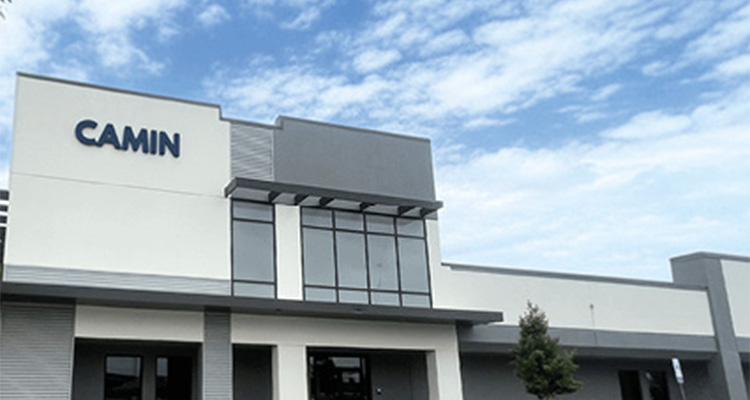
CAMIN continues to expand its Testing, Inspection, and Certification (TIC) capabilities, acting in a continuous partnership with clients
Global commodity supply chains are changing and diversifying faster than ever. Legacy energy markets are speeding up and moving beyond traditional fuels. Demand for renewable and alternative fuels is growing, driven by changing regulations and the pursuit of sustainability. This demand is now a key force in the market. Geopolitics, new producing nations, and evolving energy needs are also shifting trade routes that once seemed stable. Across the industry, energy companies want greater confidence in safely moving, measuring, and ensuring the quality and compliance of the products they buy, trade, and sell.
Testing, inspection, and certification providers feel that same pressure. They deliver data accurately and quickly across multiple regions. Their integrity and independence remain crucial because their reports can directly affect commercial outcomes.
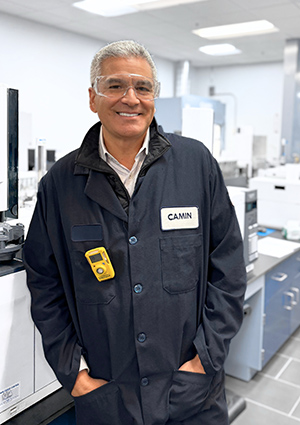
Those realities are at the center of Fernando Assing’s agenda as Chief Executive Officer of Camin Cargo Control, Inc. (CAMIN). Since joining CAMIN in February 2025, Fernando has pushed to expand the company’s geographic reach and broaden its capabilities. He has also invested in infrastructure and modernized the technology that supports operations. The goal isn’t just growth. It’s about preparing the company for a supply chain environment that is more connected, regulated, and data driven.
He started with a business that already had a strong market position. The client portfolio was one most would envy. “I saw a company with enormous potential, outstanding technical knowledge, an impressive reputation, a strong brand, and a loyal customer base. In fact, our customer retention rates are phenomenal. We rarely lose a customer because of our performance. That speaks to the quality and attention they receive from us,” Fernando recalls.
Navigating market complexity
Founded in 1982 and headquartered in Pasadena, Texas, CAMIN provides independent inspection, laboratory testing, fuel treatment, certification, and compliance-related services to customers across the energy and commodities sectors. Through approximately 64 offices worldwide, CAMIN supports trading activities at key ports, terminals, and supply chain hubs throughout the Americas and Europe.
Fernando sees inspection and testing providers playing an increasingly vital role. “Our industry is evolving. Supply chains are more complex, move faster, and in many cases, face stricter regulations – whether through tariffs, sanctions, or new frameworks in Europe and Latin America. The entire operating environment is more challenging and complex, so we must adapt.”
As regulation, trade patterns, and commodity flows become tighter and more complex, the need for an independent source of verification and certification grows. CAMIN’s business model depends on that independence and its neutrality.
Independence is key
CAMIN acts as an independent verifier between buyers and sellers. It confirms both the quantity and quality of goods. This work can influence financial settlements, contracts, and sometimes even determine whether deals go through.
“We’re always in the middle of a transaction in a world where today’s buyer is tomorrow’s seller. We must always act with integrity and impartiality, complying with buyer specifications and industry standards every time. Staying neutral and independent matters tremendously,” Fernando explains. Maintaining that position demands consistency at scale. CAMIN performs more than a million laboratory analyses each year. Many tests require measurements to parts per million or other extreme levels of precision. Every result must be accurate. Customers expect results within tight windows as cargoes move quickly through the supply chain.
For Fernando, scale isn’t just about growth. It means building an organization that delivers the same precision, consistency, and accountability everywhere it operates. “When I joined, the company needed to learn how to be bigger and prepare to be even more international as global trade becomes more interconnected. That’s why more processes, standardization, and automation technologies are top priorities for us right now.”
Focusing on consistency ultimately leads to a question facing many growing organizations: how do you scale without creating variability in execution? Long before digital transformation became a boardroom priority, CAMIN developed its own laboratory and inspection management platform, known as POLARIS. The system has evolved alongside the business and now connects field operations, laboratory workflows, customer reporting, business analytics, and financial processes.
Fernando describes POLARIS as the backbone of the system: “POLARIS is our operational ERP. It’s an end-to-end system that manages the entire lifecycle of a nomination; our equivalent of a purchase order, the customer’s instruction to get work done. POLARIS tracks every job from the first call through every stage in the supply chain until we deliver the final results.”
Digital transformation
The platform reaches across the organization. That’s why CAMIN is putting significant resources into its next phase. “We’re building what we call POLARIS 2.0; a complete reinvention of the software. We’re using more than 30 years of lessons learned and data. By applying modern software architecture, we can embed these insights directly into our operations. It’s going to be phenomenal.”
The overhaul of POLARIS reflects a broader shift in the sector. Companies now seek more value from operational data. For CAMIN, artificial intelligence is a practical extension of that work. It’s not just a separate initiative. “We handle terabytes of data, so AI is a perfect fit. We can add intelligence to our huge database to run predictive tests and anticipate what customers need before they even ask,” Fernando says.
While digital transformation remains a priority, CAMIN is growing by expanding geographically and diversifying services. “Our strategy has three parts. First, we’re expanding our capabilities in oil and gas. Second, we’re filling the gaps in our network. Third, we’re expanding into adjacent commodity markets like agriculture, metals, and minerals.”
You can see that strategy in action as CAMIN broadens its presence across the energy value chain. In the past, the company focused on a few refined products like gasoline, diesel, additives, and blending. Today, customer demand creates opportunities to diversify the portfolio across a broader spectrum of fuels and feedstocks. “For example, we now work with jet fuel, sustainable aviation fuel (SAF), biofuels, chemicals, and LPG products. Some customers remain focused on traditional energy, while others diversify or move toward renewables. Our job is to serve all of them.”
Diverse opportunities ahead
As CAMIN moves beyond its traditional focus on refined petroleum products, new fuels bring new customer needs and open new markets. “We follow our customers. When they enter new markets, we’re there soon after. We listen, understand what support they need, and tailor our services for each market.”
Following customers into emerging trade corridors has moved from strategy to execution across Latin America. At the same time, it continues strengthening its presence across Northern Europe, particularly within the Antwerp-Rotterdam-Amsterdam corridor. All while continuing to expand across North America, its most mature market.
CAMIN’s growth comes from investments across its laboratory network, including recent expansions in Pasadena and Corpus Christi and new capabilities throughout Europe and South America.
As CAMIN’s footprint grows, Fernando always returns to something as important as technology and growth: people. The TIC industry relies on technical expertise, but Fernando believes long-term success depends on how organizations develop and align their teams. “What truly sets a company apart is its culture, its people, and how you harness that potential to build a high-performing team. That’s how you create real differentiation and deliver what we call the ultimate customer experience.”
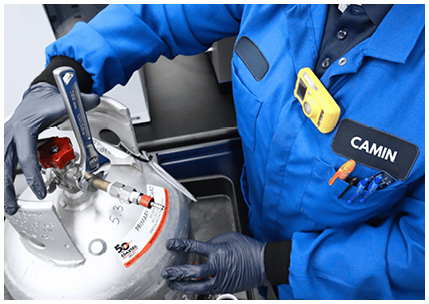
A focus on people goes hand in hand with safety and quality. Inspectors work in ports, terminals, refineries, and industrial sites, often in demanding conditions. High-performance standards go together with strong workforce engagement. As Fernando says: “Our safety statistics and track record are quite good. Our industry has a very challenging working environment. We have inspectors out and about all the time in extreme heat and extreme cold. Working in the labs can be equally challenging, with precision work being done at pace in large quantities.”
Looking ahead, Fernando expects the business to look very different from when he joined in early 2025. Expansion isn’t just about new locations or energy market capabilities; it’s about broadening CAMIN’s role across commodity supply chains. “In five years, you’ll see a much more diversified CAMIN. We’ll have grown within oil and gas, expanded across Europe, and moved into agriculture, metals, and minerals,” he predicts. Each of these sectors extends CAMIN’s expertise and helps reduce reliance on any one market.
“We’re a growth company. We understand the value and the role we play in the industry very well. The momentum is strong,” Fernando adds.