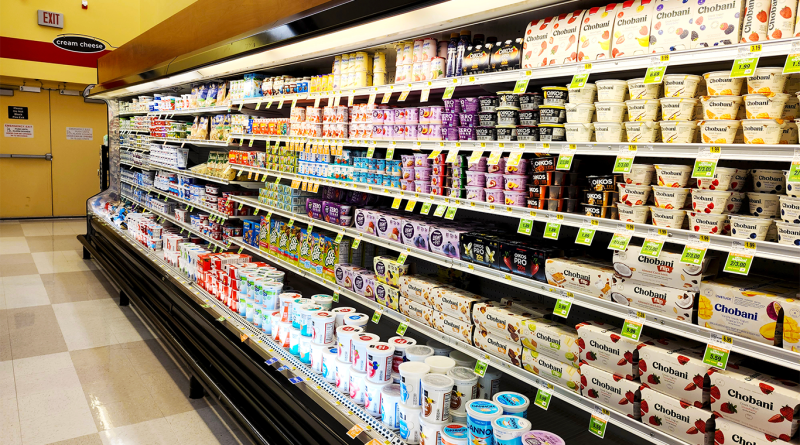
Chobani invests $1.2B to strengthen its dairy supply chain
Subscribe to our free newsletter today to keep up to date with the latest renewable energy news.
Chobani is preparing one of the largest manufacturing investments in its history, and the location says as much about the company’s strategy as the size of the commitment.
The food and beverage manufacturer plans to invest $1.2 billion over five years to turn a former Keurig Dr Pepper production site in Allentown, Pennsylvania, into its first dairy manufacturing operation in the state. At full scale, the 1.5 million-square-foot campus is expected to operate 10 production lines, create 900 jobs and source more than 3 billion pounds of Pennsylvania milk each year.
The project forms part of a wider $4 billion expansion of Chobani’s US manufacturing network, which includes investments in New York, Idaho and Michigan, and points to a broader effort to increase control over production as demand shifts toward higher-value dairy categories.
For an industry accustomed to capital-intensive processing plants, the spending is significant on its own, but the larger implication lies in what Chobani appears to be building capacity for as protein, filtration and other value-added characteristics take a greater share of consumer spending.
Protein growth is changing where dairy companies put capital
Protein has moved well beyond its historic association with sports nutrition, with consumers now encountering elevated protein claims across yogurt, milk, cottage cheese, shakes and a growing range of functional foods.
Recent retail data helps explain why manufacturers are directing more capital toward these categories, since Circana figures reported by FoodNavigator put US dairy products carrying protein claims at $10.4 billion within a dairy market worth about $104 billion.
Over the measured year, products with protein claims increased 13.7% in value and 7.5% in volume, while the broader dairy category grew 2% in value and 0.3% in volume, creating a widening performance gap between conventional dairy and products positioned around protein.
Milk shows a similar divide, with high-protein milk recording 7.7% growth in value and 1.2% in volume while conventional dairy milk remained broadly flat over the same period.
For processors, those figures strengthen the case for investing in technologies that can create more value from the same raw material, particularly through protein concentration, filtration, lactose reduction and other functional characteristics that can support differentiated pricing.
Chobani already holds a strong position in yogurt and has expanded into creamers, ready-to-drink coffee and other refrigerated products, so the Allentown development gives the company considerably more physical capacity to manufacture dairy products closer to a major milk-producing region and large East Coast consumer markets.
That proximity carries operational value because a large dairy facility depends on far more than filling lines, requiring consistent milk supply, processing infrastructure, water, wastewater capacity, energy and transportation connections that can support continuous production.
Pennsylvania is supporting the project with $50 million in loans and grants for infrastructure and site improvements, while production under Chobani is expected to begin in 2027.
Taken together, the investment suggests that Chobani sees manufacturing capacity not as a support function but as a strategic asset that can determine how quickly it responds to changes in consumer demand.
Pennsylvania gives Chobani access to milk at an unusually large scale
The volume Chobani expects to purchase could make the plant a major force in Pennsylvania dairy procurement because the company is expected to source more than 3 billion pounds of Pennsylvania milk annually when the facility reaches full scale.
Pennsylvania officials estimate that amount is equivalent to about 30% of the milk currently produced in the state, which gives some indication of how substantial the facility could become within the regional dairy economy.
The state has more than 4000 dairy farms, giving Chobani access to a large agricultural base while potentially providing farmers with another major outlet for local milk production.
That relationship between farms and factories is a critical part of dairy economics because milk is perishable, costly to transport over long distances and dependent on available processing capacity once it leaves the farm.
A new buyer operating at Chobani’s projected scale could alter regional milk flows and create additional demand for producers, while also giving the company greater security over the raw material required to support high-volume manufacturing.
For Chobani, proximity to supply could become particularly valuable if it intends to produce more differentiated dairy products at a scale capable of serving national retailers, since those products require a dependable flow of milk and sufficient processing capacity to maintain consistency.
Pennsylvania officials have described the Chobani project as the largest private investment in the state’s agricultural history, a description that reflects the size of the development but may understate its longer-term commercial significance.
If protein-led dairy continues to grow faster than the wider category, access to milk and processing capacity could become more strategically important, meaning competition may increasingly depend on which manufacturers have enough infrastructure to turn raw milk into higher-value products efficiently.
Chobani is taking control of production without giving up KDP’s reach
The Pennsylvania investment is tied to a second transaction that changes Chobani’s relationship with Keurig Dr Pepper while preserving several parts of the companies’ commercial partnership.
KDP agreed to sell its entire equity interest in Chobani back to the company for $800 million, while Chobani will separately acquire KDP’s Allentown manufacturing and warehouse assets for approximately $125 million, bringing KDP’s expected pretax proceeds from the transactions to $925 million.
An SEC filing shows that the equity redemption consists of $400 million in cash at closing and a $400 million promissory note scheduled to mature Dec. 26, 2026, with KDP saying that it plans to use net proceeds from the transaction to reduce debt.
The change in ownership does not amount to a commercial separation because KDP will continue distributing La Colombe ready-to-drink lattes and other Chobani-owned beverages through its direct-store-delivery network.
The companies are also maintaining their licensing, manufacturing and distribution agreement for La Colombe-branded K-Cup pods in the US and Canada, while Chobani will manufacture certain KDP products at Allentown for a defined transition period.
The arrangement creates a clearer division of responsibilities, with Chobani gaining greater control over a manufacturing asset that fits its dairy ambitions while continuing to benefit from KDP’s established beverage distribution capabilities.
That balance reflects a wider strategic choice in food and beverage manufacturing, where ownership of production capacity can provide tighter control over cost, innovation and supply while distribution partnerships can offer scale without forcing a manufacturer to replicate an established route to market.
Chobani’s wider $4 billion manufacturing program suggests the company sees physical production capacity as a central part of its next stage of growth rather than a secondary operational requirement.
The Pennsylvania project brings several parts of that strategy into one location by combining access to billions of pounds of milk, large-scale processing infrastructure, proximity to East Coast markets and room to produce products aimed at higher-growth areas of dairy.
If current purchasing patterns continue, the most valuable part of the investment may not be the amount of milk Chobani can process but the company’s ability to convert that milk into differentiated products that command greater value in a category where conventional volume growth remains limited.
Source:
FoodNavigator