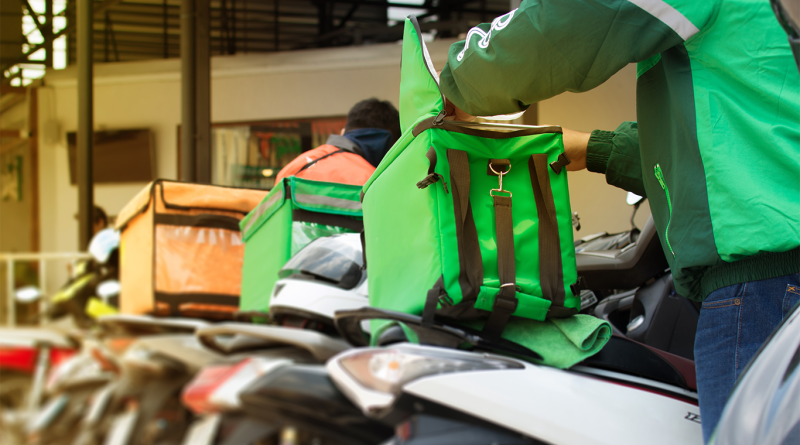
Costco expands last-mile reach with DoorDash and Uber Eats
Subscribe to our free newsletter today to keep up to date with the latest renewable energy news.
Costco has spent decades building a retail model designed around getting members into large-format warehouses, where bulk purchasing, limited assortments and high inventory turnover support its value proposition. Its latest delivery agreements point to a broader interpretation of that model, one in which those same warehouses serve not only as shopping destinations but as fulfillment points for a growing network of third-party delivery platforms.
The retailer has expanded its relationship with Uber Eats across the 47 US states where Costco operates and launched nationwide delivery through DoorDash. Both agreements give members additional ways to order groceries, household goods and other merchandise without visiting a warehouse, while extending Costco’s digital reach through platforms that already have large consumer audiences and established driver networks.
For Costco, the appeal lies in adding more routes to the customer without having to build a national last-mile operation from the ground up. For DoorDash and Uber Eats, the agreements provide access to a major membership retailer as both companies continue pushing beyond restaurant delivery and deeper into grocery and general retail.
Costco is building more routes to the customer
DoorDash now offers same-day delivery from Costco’s US warehouse network, with members able to shop thousands of products through the app after linking an active Costco membership. Uber Eats has expanded its Costco service from 17 states to 47, covering nearly 600 locations and offering both on-demand and scheduled delivery.
Those services sit alongside Costco’s long-running relationship with Instacart, which means the retailer is not replacing one delivery partner with another. Instead, it is distributing its digital demand across several large marketplaces and allowing customers to choose among platforms they may already use for restaurants, groceries and other purchases.
That structure matters from a logistics perspective because Costco can extend delivery availability without taking on the full capital burden of a proprietary fleet. The third-party platforms provide much of the ordering infrastructure, driver capacity and final-mile execution, while Costco’s warehouses continue to function as the source of inventory.
The arrangement is attractive to the delivery companies for a different reason. Costco operates hundreds of warehouses across the US and serves a vast membership base, creating access to shopping missions that can extend well beyond a typical restaurant order or small grocery basket. A single transaction may include fresh food, pantry items, household products, electronics or bulky merchandise, making the relationship commercially valuable but operationally more demanding.
DoorDash has said Costco was among the most searched-for retailers that had not previously been available on its US marketplace. That demand helps explain why major delivery platforms are investing heavily in grocery and retail, where order frequency and basket size can provide a larger opportunity than restaurant delivery alone.
Grocery delivery is becoming a platform competition
DoorDash and Uber Eats built their identities around prepared food, but both have spent recent years expanding into groceries, convenience products and retail. The logic is straightforward: consumers may order restaurant meals irregularly, whereas food, household supplies and other recurring purchases can create more frequent reasons to open the same app.
Large retailers are particularly attractive because they bring established brands, extensive inventory and regular customer demand into marketplaces that already have technology, payment systems and driver networks in place. Costco adds another layer to that model because its membership structure and warehouse format produce purchasing behavior that differs from the conventional supermarket trip.
A Costco order can include fresh produce, large packs of paper goods, beverages, cleaning products and electronics in the same transaction. That variety creates a more complicated fulfillment job than moving a restaurant meal from one location to another, particularly when orders contain oversized or temperature-sensitive products.
The shift also coincides with strong digital growth at Costco. Ecommerce sales rose 22.6% year over year during fiscal Q2 2026, while website traffic increased 32% and app traffic climbed 45%. Costco management has said same-day sales through Instacart, Uber Eats and DoorDash are growing faster than the company’s wider digital business, suggesting that convenience-led ordering is becoming a more meaningful part of how members shop.
That development changes the operational role of the warehouse. It remains a destination for customers who prefer to shop in person, but it also serves as a local fulfillment point for orders placed through several external platforms, creating a hybrid model in which the same inventory supports both physical and digital demand.
For supply chain teams, this is one of the more significant implications of the strategy because stores and warehouses are increasingly becoming components of distributed fulfillment networks rather than facilities dedicated to a single sales channel.
Convenience changes the warehouse value equation
Costco’s traditional proposition has always relied partly on the customer completing the final leg of the supply chain. Members travel to the warehouse, select products, move them through checkout, load them into a vehicle and transport them home, effectively performing work that would otherwise fall to a delivery provider.
Same-day delivery changes that equation by allowing customers to transfer much of that effort to a third party, which can be particularly attractive for bulky purchases, large household orders or occasions when avoiding a warehouse trip is worth more than obtaining the lowest possible transaction cost.
The shift does not undermine Costco’s warehouse model so much as broaden the circumstances in which members can buy from it. Customers who value the traditional in-store experience can continue shopping that way, while those placing a premium on convenience can use delivery without leaving Costco’s ecosystem.
The multi-partner approach also gives Costco more flexibility than a single-provider model. By working with Instacart, DoorDash and Uber Eats, the retailer can reach customers across several established marketplaces while reducing its dependence on any one company for same-day fulfillment.
That arrangement reflects a wider question facing large retailers as ecommerce becomes more closely integrated with physical stores: how much of the last mile should they own themselves, and how much should they source from outside providers?
Building an internal fleet can offer greater operational control, but it requires substantial investment in vehicles, drivers, routing systems and delivery technology. Third-party marketplaces provide another route, allowing retailers to extend the reach of existing locations through infrastructure that has already been built by someone else.
Costco’s delivery expansion shows how those approaches can coexist with a warehouse-led retail model. Its physical network remains central to the business, but the function of that network is becoming broader as warehouses increasingly serve both customers walking through the doors and digital orders beginning their final journey elsewhere.
For DoorDash, Uber Eats and Instacart, that makes Costco’s warehouse footprint more than another retailer to add to an app. It represents access to a large pool of recurring consumer demand and another opportunity to establish a stronger position in the increasingly competitive market for grocery and retail delivery.
Source:
The Independent