Dark warehouses are moving from concept to business case
Subscribe to our free newsletter today to keep up to date with the latest renewable energy news.
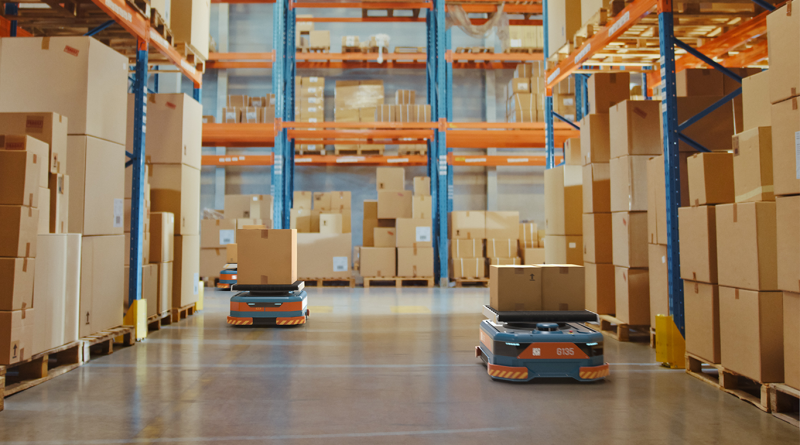
A warehouse does not need lights if there are almost no people working inside it, which is why the dark warehouse has become one of the more compelling end states for logistics automation. In this model, goods arrive, enter storage, move into picking and reach outbound staging with little or no manual handling, while a small technical team maintains the equipment rather than participating directly in product movement.
Parts of that operating model already exist across highly automated facilities. Automated storage and retrieval systems can move pallets with limited human intervention, and robots routinely transport inventory across large fulfillment centers, but individual item picking remains more difficult, particularly in e-commerce operations where thousands of products differ in dimensions, packaging, weight and orientation.
That technical limitation is beginning to narrow as robotic manipulation improves and more vendors develop systems capable of handling a broader range of products at commercially useful speeds. Forbes reports that technologies now exist to create a touchless picking process from induction through dispatch for suitable products, and Locus Robotics strengthened its position in this area when it acquired Nexera Robotics in May 2026, adding suction-based robotic picking technology designed for rapid handling of items weighing less than 5 pounds.
The question facing warehouse operators is therefore changing from whether a highly autonomous warehouse can be built to whether removing people produces a better return than equipping them with increasingly capable machines.
The hardest part of warehouse automation is getting easier
Moving a pallet through a predictable environment is a relatively controlled engineering problem, whereas picking individual products introduces a much wider range of variables that machines must interpret and manage consistently. A robot handling individual items must locate the correct product, determine how to grasp it, execute the movement without causing damage and place it accurately before repeating the same process across thousands of stock keeping units that were never designed for robotic handling.
This complexity explains why many established warehouse automation systems stop just short of eliminating the worker completely. Autonomous mobile robots can remove much of the walking from order picking, goods-to-person systems bring racks, totes or bins directly to a workstation and AutoStore installations use robots running across a storage grid to retrieve the correct bin and deliver it to an operator.
These systems automate transportation and storage with considerable precision, but a person still frequently completes the final item pick because human dexterity remains valuable when products vary widely in shape, packaging and orientation.
For collaborative robot systems, that arrangement can be economically attractive because it automates the least productive parts of the picking cycle while preserving human flexibility where it still matters. Forbes reports that Locus Robotics deployments can increase picking rates by 2-3 times, largely because robots handle much of the movement through the facility while workers concentrate on selecting products rather than walking long distances between locations.
Robotic arms are beginning to challenge this division of labor as improvements in machine vision, gripping systems and control software allow automation to move into tasks that were previously too variable for reliable machine handling. Interact Analysis reported in August 2026 that global robotic picking revenue increased 28% from $1.4 billion in 2024 to $1.7 billion in 2025 and forecasts that the market will reach $4.6 billion by 2030, representing average annual growth of just under 22%.
The composition of that market is equally revealing because palletizing and depalletizing accounted for about 83% of robotic picking revenue in 2025, while Interact Analysis expects that share to fall to about 58% by 2030 as applications such as bin picking and robotic trailer unloading grow more quickly.
This shift matters because dark warehousing depends on more than automated transport. If robots can reliably perform the individual handling tasks that still require people, operators can begin to remove one of the final labor-intensive stages from the fulfillment process.
A worker with robots can still beat a warehouse without workers
Technical capability alone does not settle the investment case because many warehouse operators need flexibility as much as they need labor efficiency. Product ranges change, order profiles fluctuate, seasonal demand rises sharply and then falls, facilities are reconfigured and automation must respond to these changes without turning every operational adjustment into another major capital project.
This is one reason collaborative robots and autonomous mobile robots have gained traction across logistics operations. Capacity can often be added incrementally, systems can be moved or expanded as requirements change and Robotics-as-a-Service models can reduce the need for large upfront investments.
A system that doubles or triples the productivity of an existing picker may therefore present a stronger financial case than replacing that employee through several layers of fixed automation, particularly when the warehouse already exists and must continue operating during the transition.
This is also where the idea of the dark warehouse can become misleading because removing every person is not necessarily the same as optimizing the operation. EY reported in May 2026 that most organizations pursuing autonomous warehousing are building hybrid operations that integrate humans and robots, with advanced orchestration systems acting as the control layer that assigns tasks and coordinates equipment and workers across the facility.
That operating model changes the role of the warehouse workforce without eliminating it. Employees spend less time walking, transporting goods and completing repetitive movements, while human labor shifts toward exception handling, equipment management, maintenance and tasks that remain difficult to automate economically.
Humanoid robots could eventually alter this calculation because they are intended to operate in environments originally designed for people, creating the possibility that a general-purpose machine could perform several jobs without requiring an operator to redesign the entire facility around specialized automation.
For item picking today, however, the economics and operating speed remain constraints. The Forbes article cites warehouse robotics specialist John Santagate describing current humanoid systems as too slow and too expensive for broad picking applications, while more specialized systems can already perform defined warehouse tasks at industrial speeds.
The near-term competitive question is therefore less about whether warehouses will need people at all and more about which combination of people, mobile robots, storage automation and robotic manipulation produces the lowest cost per order without sacrificing adaptability.
Dark warehouses may be built rather than converted
The strongest case for the dark warehouse may come from facilities that do not yet exist because existing distribution centers contain physical and operational constraints accumulated over years of use. Aisles have fixed dimensions, racking is already installed, conveyors occupy specific routes, dock configurations are difficult to change and software may need to connect modern robotics with equipment installed several technology generations earlier.
Retrofitting full automation into that environment requires machines to conform to a facility designed around human movement, which can reduce the efficiency gains that automation is intended to deliver and make the financial case more difficult to justify.
A greenfield warehouse can reverse that equation because storage density, workstations, robotic pathways, staging areas, safety zones and software architecture can all be designed around automation from the beginning. Tasks that would require expensive reconstruction in an existing facility can instead be removed from the design entirely, while robotic movement and storage can be planned as part of a single operating system.
This distinction is beginning to appear in long-range industry forecasts. Gartner predicted in April 2026 that 50% of new warehouses built in developed markets will be designed as robot-centric facilities by 2030, with human participation optional and labor increasingly focused on exceptions rather than routine movement and handling.
That forecast does not mean half of all warehouses will be dark by 2030 because it applies to new construction in developed markets and leaves a vast installed base of conventional facilities operating under different economics. It does suggest, however, that the route toward dark warehousing may depend more on new construction than on the gradual removal of workers from every existing distribution center.
The first facilities to approach full autonomy are likely to share favorable characteristics, including high throughput, predictable inventory, products that robots can handle reliably, long operating hours and labor economics that can justify substantial capital investment.
Other operations will have little reason to pursue the same target because warehouses with irregular inventory, frequent process changes or lower throughput may derive more value from flexible automation that keeps people in the workflow while using machines to reduce travel, repetitive handling and other low-value activity.
Dark warehousing is therefore becoming a credible operating model without yet becoming the default one, and the distinction will depend less on whether the technology exists than on where the economics justify using it.
The technology is approaching the point where a product can enter one side of a carefully designed facility and reach the other with almost no human contact, but the more consequential question for logistics executives is whether eliminating those final touches produces enough financial and operational value to justify the investment.
For many existing warehouses, that answer may remain no because flexible human-robot systems can deliver substantial productivity gains without the cost and rigidity of full automation. In the next generation of purpose-built facilities, where storage, movement and picking can be designed around machines from the outset, the calculation may look very different.
Source:
Forbes