Discover how steel distributor Damstahl was recognized as the best B2B e-commerce company of the year
Steel distribution is not an industry that tends to make headlines for digital innovation or warehouse automation. Damstahl, one of the leading European distributors and stockholders of stainless steel and metals, is changing that perception. The company has spent years investing heavily in automated logistics and co-founding its own e-commerce platform. Before we can discover how those investments are paying off, Manuel Hanke, Chief Commercial Officer in Central Europe, shares an overview of Damstahl’s operations.
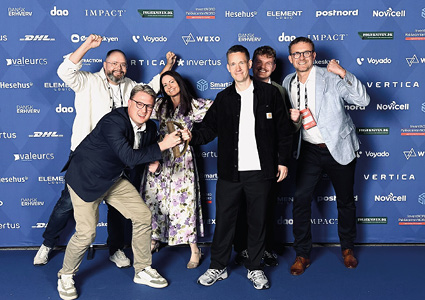
“We are family-owned by the NEUMO Ehrenberg Group, which was founded in Germany in 1947 and owns several production facilities. Operating across more than ten European countries, Damstahl sells more than 70,000 tons of stainless steel every year, with annual sales of around €350 million. Our core products are sheets, bars, tubes, fittings, and flanges, but we have always strived to be more than a traditional steel distributor. As such, we combine an extensive stock program with strong logistics, technical expertise, and a digital mindset. Actively working on digital integration, we already have two large automated warehouses, one in Germany and one in Denmark. Our philosophy is captured in our slogan, ‘On your side,’ which means building long-term customer relationships, optimizing mutual business, and taking responsibility for the partnerships we enter into,” Manuel begins.
Automation that meets demand
With customers across energy, food processing, and pharmaceuticals, Damstahl’s operational philosophy evolved alongside shifting customer priorities over the years. Where customers once focused primarily on getting the right material at the right price, they are now looking at the entire supply chain. Supply security, traceability, and documentation have become far more important, particularly in food and pharmaceutical applications where hygiene standards and compliance requirements are stringent. Sustainability is another growing consideration as customers want to know where their material comes from and what its carbon footprint is. Meanwhile, energy customers are increasingly focused on supply chain security to ensure they can deliver their projects on time and without interruption. Across all sectors, digital integration is becoming a baseline expectation, as customers look to reduce manual processes and gain more transparency over their supply chains.
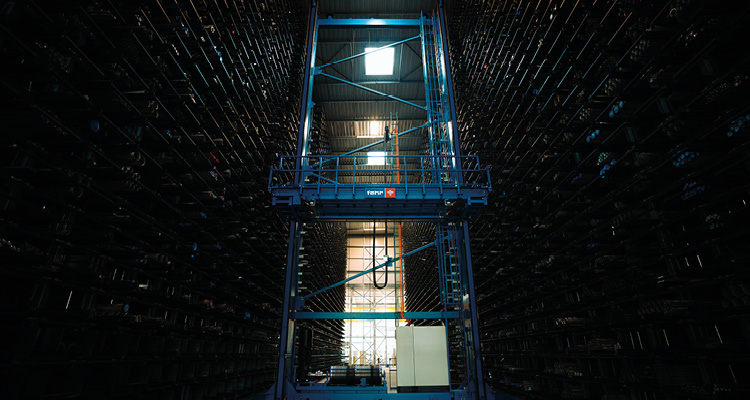
It is against that backdrop that Damstahl has made the most significant investments in its 66-year history: two new automated warehouse systems and a new cutting department that have transformed its logistics capabilities. Stephan Schuler, Group Supply Chain Director, explains why those investments were necessary and what they have delivered. “First of all, the new warehouses support the growth of our business by increasing our capacity. In Denmark alone, we can store more than 10,000 metric tons in one of our automated high-bay warehouses. In Germany, we have almost double that capacity, roughly 20,000 metric tons, which gives us a platform to support further growth. Beyond capacity, automating our warehouses has delivered real efficiency gains. In this business, everything comes down to cost per ton, and these investments have made us more competitive in the market.
“The second benefit is the way our two warehouses work together. They are fully interlinked in terms of transport, which means a customer in Norway or Sweden can be supplied just as efficiently from our Langenfeld facility in Germany as from Denmark given that stock moves between the warehouses overnight. Rather than simply having inventory in two locations, we have an optimized network that routes supply based on what each customer needs and where they are. We are proud to say that both warehouses are now operating at close to 100 percent on-time shipping performance. They are delivering as promised and offer strong logistical quality.
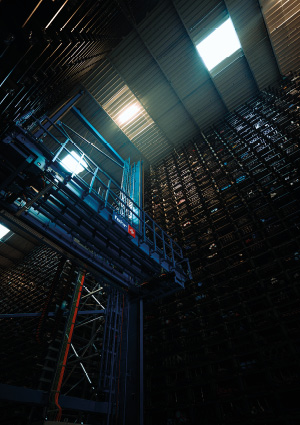
“Another important capability resulting from these investments is being able to efficiently cut steel bars. To that end, we built a fully automated cutting department into our German facility, with 14 saws. When customers place cutting orders, the system automatically retrieves the relevant bars or tubes from the warehouse, feeds them to the saws, and the cut material is packed and dispatched. That is a significant capability for our customers, many of whom previously had to take delivery of standard six-meter bars and cut them down themselves. Now we can do that for them, efficiently and at scale,” Stephan elaborates.
From the ground up
Damstahl’s operational excellence is matched by an equally distinctive approach to digital commerce. Although steel distribution is not an industry commonly associated with e-commerce innovation, the company was recognized as the best B2B company at this year’s e-commerce awards. Manuel sheds light on how the company has achieved that. “Many years ago, we co-founded a company called Slize Commerce alongside an entrepreneur with a decade of experience across both e-commerce and the steel industry, and we remain a shareholder today. At the time we launched it, we were actually half of Slize’s entire customer base, which gave us the opportunity to shape the platform from the ground up, putting our own vision of what a steel e-commerce solution should look like into the product from day one.
“We use Slize ourselves: our own sales teams use the platform to place orders and access the web shop, so the push towards digitalization starts from the inside. Additionally, we are actively encouraging every colleague who is in contact with customers to champion the platform and highlight its benefits, which include speed, accuracy, real-time availability of information, and more. We have invested a seven-figure sum into that to come to the stage where we are now. But as we always say, people are just as crucial as digital infrastructure itself to make it work. You have to convince your own people first, and then with that knowledge, they can convince your customers. I think that belief as well as our consistent investments in digitalization over the years have brought us to where we are now,” he ends.
Understanding that innovation is the way forward, Damstahl has spent years building its own digital platform and automating its warehouses to improve its services. Alongside that, the company has been treating its customers’ need for supply chain transparency and traceability as a priority, and it is already proving to be a strong competitive advantage.