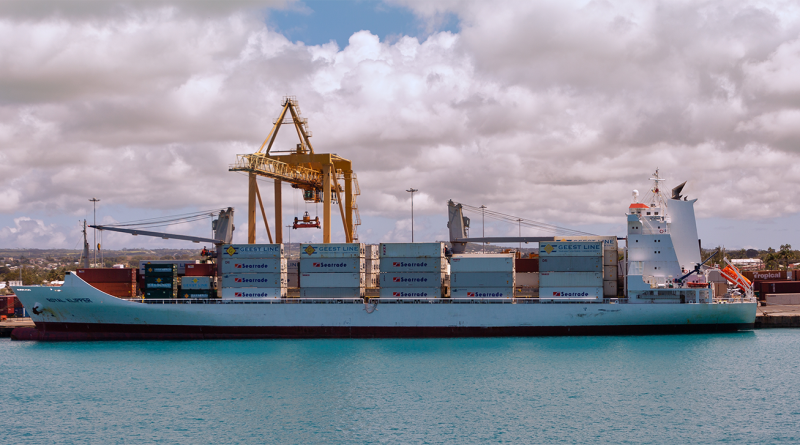
Freight disruption pushes Asia-US rates toward new highs
Subscribe to our free newsletter today to keep up to date with the latest renewable energy news.
Asia-US container rates have moved within striking distance of their pandemic-era records as geopolitical disruption, port congestion, capacity management and rising fuel costs combine to put renewed pressure on the transpacific market.
Average spot rates from the Far East to the US West Coast reached $7960 per 40-foot equivalent unit, or FEU, on Sept. 17, according to Xeneta. Rates to the US East Coast reached $11,259 per FEU.
Those figures represent increases of 323.6% and 324.7%, respectively, since Feb. 28, before the latest Middle East shipping disruption intensified. West Coast rates now sit 17.9% below their February 2022 record, while East Coast rates are 11.2% below the January 2022 peak of $12,683 per FEU.
For shippers, the scale of the increase matters as much as the prospect of another record. Freight buyers are again confronting a market in which events thousands of miles from the Pacific are feeding into transportation budgets, transit times and inventory decisions.
The pressure is not coming from one source. Higher bunker costs, geopolitical disruption, weather-related delays in China and carrier decisions on vessel capacity are developing at the same time. Conditions at the Panama Canal are adding another variable for cargo moving toward the US East Coast.
Several disruptions are pushing transpacific costs higher
The Asia-US market entered September with freight prices already elevated, but the gap with Covid-era records has narrowed rapidly.
Xeneta’s Sept. 18 market update put Far East-US West Coast rates 324% above their pre-crisis level and East Coast rates 325% higher when rounded to whole percentages. The increase has been sharper than on other major east-west trades. Far East-North Europe rates, for comparison, were 84.9% above their Feb. 28 level.
The disruption has also affected service quality. Earlier in September, Xeneta reported global schedule reliability of just 29.4% for August. The figure was down 3.3 percentage points from July, leaving shippers paying considerably more while facing less predictable service.
Conditions at Chinese ports are part of that operational problem. Seatrade Maritime reported that 1.1 million TEU were at anchor around three Chinese gateways at the end of August following a series of typhoons. Average delays were expected to exceed four days during September. The report also cited Xeneta data showing 3.25 million TEU arriving more than 10 days late.
China’s Golden Week holiday presents another near-term pressure point. Cargo owners commonly seek to move shipments before factories and other businesses close for the holiday period, creating a concentrated demand window.
Carrier behavior can amplify that pressure. Drewry reported nine canceled sailings for the week beginning Sept. 21, up from eight the week before. Its Sept. 17 assessment put Shanghai-Los Angeles spot rates at $7712 per FEU after a 5% weekly rise, while Shanghai-New York increased 7% to $10,394.
There is another constraint for East Coast supply chains. The Panama Canal has temporarily reduced daily transit capacity because precipitation in its watershed has fallen below expected levels. Panamax slots were set at 25 per day from Sept. 3 and reduced to 23 from Sept. 15. The canal authority has warned that vessels arriving without reservations could face longer waiting times.
These pressures do not affect every shipment in the same way, but together they reduce the amount of spare capacity and schedule flexibility available to cargo owners when disruption occurs.
More capacity does not automatically mean lower freight rates
One of the more unusual features of the current market is that carriers are adding capacity to the transpacific trade even as freight prices continue to rise.
Xeneta reported that offered capacity from the Far East to the US East Coast was 6% to 7% higher in September than in August. Its interpretation is that carriers are deploying additional tonnage while rates remain attractive, particularly before the market has a chance to cool after Golden Week.
At first glance, that should create downward pressure on prices. In practice, total capacity tells only part of the story.
Shipping lines can add vessels or space on selected services while canceling individual sailings elsewhere, repositioning ships or adjusting schedules in response to demand. Congestion can remove effective capacity from the market as vessels spend more time waiting rather than carrying cargo between ports.
The result is a market where nominal vessel capacity can rise without immediately translating into more usable capacity for shippers.
Past transpacific cycles show why that distinction matters. During 2024, Xeneta recorded falling spot rates even as US West Coast import volumes remained exceptionally strong. The main difference was that carriers had made enough capacity available to relieve pricing pressure.
The current market is moving in the opposite direction. Disruption is absorbing capacity at several points in the network while carriers actively manage available space.
That leaves procurement teams with a more complicated calculation than simply tracking headline freight indices. Schedule reliability, blank sailings, port waiting times, fuel surcharges and routing constraints can have a direct bearing on the actual cost of getting a container to its destination.
For US importers, East Coast movements warrant particular attention. The current Xeneta average of $11,259 per FEU is $1424 below its pandemic record. A further increase of roughly 12.6% from the Sept. 17 level would take the nominal rate above that previous peak.
Xeneta expects another attempt to raise rates around the start of October as cargo moves ahead of Golden Week, followed by the possibility of slower growth or softer pricing. That remains an outlook rather than a certainty.
The next phase will depend on whether congestion clears, carriers maintain additional transpacific capacity, Panama Canal conditions improve and geopolitical disruption eases. Until those pressures change materially, Asia-US freight buyers remain exposed to a market where available capacity can tighten quickly and prices can move much faster than underlying cargo demand.
Source:
Seatrade Maritime News