Georgia advances $2.3 billion Savannah container terminal
Subscribe to our free newsletter today to keep up to date with the latest renewable energy news.
Georgia Ports Authority has secured federal approval for its proposed $2.3 billion Savannah Container Terminal, clearing a major regulatory hurdle for one of the largest planned container port developments on the US East Coast.
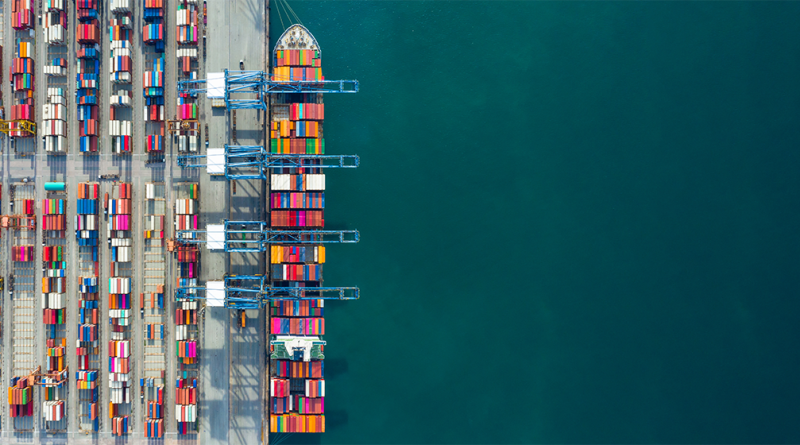
The US Army Corps of Engineers granted the permit following a three-year review, allowing the authority to advance plans for a new container terminal on Hutchinson Island in Savannah, Georgia. The 350-acre facility will provide 3.5 million TEUs of additional annual handling capacity and feature three berths capable of accommodating some of the world’s largest container ships.
Construction is scheduled to begin in January 2028, with completion anticipated in the mid-2030s. The development forms part of a broader infrastructure investment program intended to increase Savannah’s annual container handling capacity from 7.75 million TEUs to approximately 12 million TEUs, representing an increase of nearly 55%.
The project reflects Georgia’s long-term ambition to strengthen Savannah’s position as a major US container gateway, with investments in terminal infrastructure accompanied by improvements to rail connections, road access and inland freight distribution.
Savannah’s expansion plans extend well beyond a single terminal
The Savannah Container Terminal represents the largest individual development within Georgia Ports Authority’s planned infrastructure investment program of nearly $5 billion over the next decade, demonstrating its commitment to expanding capacity ahead of anticipated growth in international container trade.
The facility will occupy approximately 350 acres on Hutchinson Island, opposite existing port infrastructure along the Savannah River. Construction will proceed in phases, with marine berths, container storage areas and supporting infrastructure designed to accommodate larger vessels and higher cargo volumes.
The investment accompanies a separate $1.6 billion redevelopment of Ocean Terminal, where an existing maritime facility is being converted into a substantially larger container handling operation. Georgia Ports Authority expects the project to increase Ocean Terminal’s annual capacity from 200000 TEUs to 1.75 million TEUs, with completion scheduled for the end of 2028.
By late September 2026, construction at Ocean Terminal was more than 60% complete, with an upgraded berth already delivered and further improvements underway across the terminal’s container yard and supporting facilities.
Together, the two developments will provide five additional large-ship container berths, expanding Savannah’s ability to accommodate simultaneous vessel calls and manage higher container volumes without placing excessive pressure on its existing terminal infrastructure.
Georgia Ports Authority has approved approximately $4.13 billion in infrastructure improvements over the preceding decade, reflecting a sustained investment strategy that extends beyond individual construction projects.
The authority’s target of 12 million TEUs represents planned port-wide handling capacity rather than an estimate of immediate cargo throughput. Achieving that capacity will require the completion and operational integration of several infrastructure developments, with investment decisions shaped by anticipated shipping demand and the requirements of international carriers.
Rising container volumes reinforce the case for investment
Savannah’s expansion follows a period of substantial container activity that has reinforced its position as a major gateway for cargo moving between international shipping routes and the southeastern United States.
The port handled 5.67 million TEUs during fiscal 2026, marginally below the approximately 5.7 million TEUs recorded during the preceding fiscal year. Although annual volumes remained broadly stable, subsequent monthly figures indicate continued demand for Savannah’s container handling services.
In September 2026, the port processed 504015 TEUs, an increase of 3.7% compared with September 2025 and a record for the month. Container throughput during the first quarter of fiscal 2027 exceeded 1.5 million TEUs, representing growth of 2.7% year over year.
Georgia Ports Authority attributed September’s performance partly to strong consumer spending and an extended peak shipping season, with weather-related disruption at Asian ports contributing to the timing of cargo arrivals.
These figures provide context for the authority’s investment plans, although monthly fluctuations and temporary changes in shipping patterns cannot establish the level of demand that will exist when the new terminal becomes operational.
The ability to accommodate additional container volumes will depend on the performance of Savannah’s inland transportation network, particularly as larger vessels concentrate more cargo into individual port calls.
Georgia Ports Authority reports approximately 40 weekly container ship calls, supported by 42 double-stack train movements each week and around 15000 daily truck gate moves.
During fiscal 2026, the Mason Mega Rail facility handled 541405 containers, with rail accounting for approximately 17% of the port’s total container trade.
Supporting investments include the $134 million Gainesville Inland Port, which opened in May 2026 to improve rail access for manufacturers and distributors in northeastern Georgia, and the $130 million Brampton Road Connector, which opened in July 2026 to provide improved highway access to Garden City Terminal.
The combination of marine terminal development and inland infrastructure investment is intended to increase container handling capacity without transferring congestion from ships and terminals to roads, rail facilities and distribution networks.
Greater terminal capacity could strengthen East Coast supply chains
For international shipping companies, Savannah’s proposed terminal offers additional berthing capacity at an established East Coast gateway serving manufacturing, retail and distribution markets across the southeastern United States.
The introduction of larger container vessels places increasing demands on marine terminals, where substantial cargo volumes must be unloaded, stored and transferred to inland transportation networks within relatively concentrated operating periods.
Additional berths and container storage capacity could give Savannah greater flexibility in managing vessel arrivals, particularly during periods of concentrated cargo activity or disruption elsewhere in international shipping networks.
Importers and exporters may benefit from additional handling capacity and improved access to inland logistics infrastructure, although the commercial advantages will depend on vessel schedules, terminal productivity, transportation costs and the availability of reliable road and rail connections.
The project also carries long-term commercial uncertainties. With completion anticipated in the mid-2030s, future demand will be influenced by changes in global trade patterns, manufacturing investment, shipping line strategies and the competitive position of other East Coast ports.
Georgia Ports Authority’s investment program represents a substantial commitment to infrastructure development ahead of expected demand, with the Savannah Container Terminal forming a central component of its wider capacity expansion strategy.
Federal approval now allows the authority to advance construction preparations while related terminal, highway and rail projects continue across its logistics network. The scale of these investments positions Savannah to accommodate higher cargo volumes over the coming decade, although the extent of future growth will depend on how international trade develops and how effectively the additional capacity is brought into operation.
Source:
PortNews