Having surpassed one billion rides, Lime’s in-house hardware model is the secret to success
Once you’ve spotted the distinct shade of lime green on the street corners of cities around the world, you can’t unsee it. Whether outside London tube stations, leaning against railings in Paris, or lining the streets of Portland, Lime is a name – and a color – synonymous with transformative urban micromobility. This bright green hardware represents one of the fastest shifts in urban transportation as we move toward lighter, electric, and fun transport.
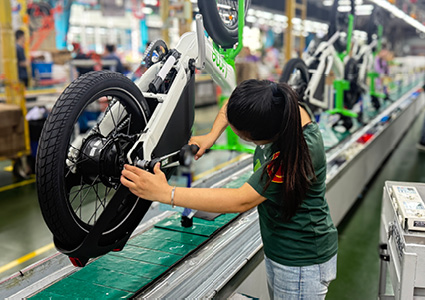
Founded in 2017, Lime has quickly grown into the largest global shared micromobility provider, operating a fleet of internet-connected vehicles in approximately 230 cities across 29 countries on five continents. Lime offers a convenient way to manage transportation in large urban environments, allowing people to access, unlock, and rent electric scooters and bikes using their smartphones. However, unlike other electric micromobility brands, Lime doesn’t source off-the-shelf hardware but instead designs, develops, and manufactures its own vehicles through close manufacturing and ODM partnerships. John Jacobson, Chief Supply Chain Officer, joins us to elaborate on Lime’s growth journey and why this model stands out from competitors.
“As with any startup, success starts with building the foundational skills within the team,” John opens. “When I first started in December 2021, Lime was steadily recovering from the pandemic and was developing key capabilities and resources necessary to grow and scale. I spent those early days building core organizational capabilities, establishing a planning function, developing our supplier management, quality, and strategic sourcing teams, and building our logistics, distribution, and fulfillment capabilities.
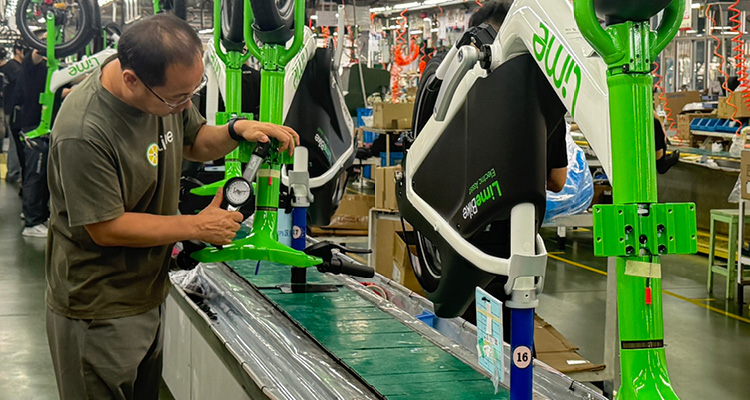
“Custom hardware is a key differentiator for Lime, which provides three specific benefits: we can optimize our fleet to deliver the best hardware experience for our riders and cities, we manage our costs and business risks by controlling the supply chain, and we have built the core capabilities to source and integrate “best-of-breed” future technologies to our vehicle platform. Developing our own hardware gives us freedom and flexibility to make specific improvements or changes to the vehicle platform. With our new LimeBike and LimeGlider, for instance, we used feedback from our Gen4 e-bike riders to improve the frame design which made the bike more accessible and approachable to more people. The new products include features like smaller wheels, improved weight distribution and handling, and a friendly step-through design. The new LimeBike and LimeGliders have been incredibly popular so far.
“Owning our design means we can develop our supply chain to deliver the agility, performance, and potential scalability that our business requires. Managing a supply chain in today’s environment means you must be prepared to deal with change and disruption. Over the past couple of years, we’ve done the hard work to diversify our supply chain, both geographically and across suppliers.
“Lastly, developing our own hardware supports a strong position for future innovation,” John adds. “We’re super proud to have passed the one billion rides milestone, and having this level of experience and engagement with our riders allows us to continuously improve the hardware in terms of safety, reliability, and total cost of ownership. We’ve built corporate muscles for advanced sourcing and technology integration, which supports innovation of new designs and features.”
Why sustainability is key
With transportation being the second leading contributor of global greenhouse gas emissions, largely due to road vehicles, sustainability is also one of Lime’s core priorities. Electric shared micromobility is among the most sustainable transport models in the world, and one Lime trip uses an estimated 75 percent less carbon than a comparable car or ridehail trip. Lime was the first company in the industry to set a net-zero target validated by the Science Based Targets Initiative (SBTi), with ambitious goals to cut 76,000 tons of carbon by 2030.
“Sustainability is a core part of our mission,” John confirms. “As well as setting industry-leading carbon targets and being a proven alternative to cars, we’re reducing our environmental impact by powering our vehicles with 100-percent renewable energy and moving toward a zero-emissions operations fleet. We integrate sustainability into our products, using low-carbon aluminum and battery cells produced on renewable energy. We’ve also partnered with industry-leading recyclers to ensure the main elements of our batteries, like cobalt, lithium, nickel, and copper, can be recovered and recycled at the end of life. And we have innovative partnerships to harvest rare earth magnets from our end-of-life motors, to reintroduce those materials back into the supply chain.”
Diverse experience
On a more personal note, John’s career prior to Lime helped to shape his strategic approach to growing and developing businesses. “I started out as a manufacturing engineer in the electronics division at Ford Motor Company, and while I was there, I had the opportunity to go to Stanford for graduate school,” he reflects. “Growing up in a small town in the Midwest of the United States, Stanford was a turning point both personally and professionally. The experience opened my eyes to a completely new world of possibilities. I eventually left Ford in Michigan and moved to Silicon Valley to gain my first experience in a startup that developed one of the first high-performance fax-to-email machines and became a pioneer in internet faxing.
“My friends at Ford thought I was crazy to leave. But from that first startup, I’ve been fortunate to have varied career opportunities across multiple industries, including several other startups, with diverse businesses such as last-mile broadband wireless networking, high performance computing, and data center virtualization. One of the startups was acquired by Cisco, and I learned a ton about global supply chain management during the five years I spent there. I left Cisco to try my hand at consumer electronics, and joined a small company in Santa Barbara California called Sonos, which at the time was a $60-million startup. I spent the next seven years scaling their supply chain to support a $1-billion business and eventual IPO.
“My first experience in the micromobility industry came after Sonos when I led operations for a startup called Boosted that was designing and manufacturing a line of premium electric skateboards. Lime ultimately acquired IP associated with Boosted’s products. I had since moved on to another startup, but one day, I got a call from Joe Kraus, Lime’s President, who wanted to talk to me about an opportunity to lead Lime’s supply chain team. I was aware of the nascent (and chaotic) shared micromobility business from my Boosted experience, but the more Joe and I talked about it, the more I could see how the business might succeed where others had failed. I loved the company’s mission, and was impressed by the smart, driven people that were coming together to make this business happen.”
An interdisciplinary approach
Given John’s experience across complex companies and emerging markets, we’re keen to explore what motivates him to take on these challenges. “I’ve always been a curious person who gravitated toward solving hard, interesting problems,” he shares. “Looking back as a kid growing up in Janesville, Wisconsin, I simply would never have imagined my career path would have led me to where it has. I’m very grateful for the opportunities and experiences I’ve had.”
These experiences have led to John’s interdisciplinary approach to his role at Lime, ensuring the company’s hardware and sourcing operations are a means of overall growth. As our conversation ends, we ask John about what’s next for Lime. “We believe we’re just getting started in so many ways,” he says. “We see tremendous opportunity to shift how people move in cities and rethink urban mobility more broadly, leading to healthier and more people-oriented cities.
“It’s very exciting to be part of this industry, as more people are discovering the fun and convenience of shared micromobility platforms,” John concludes. “Whenever there are tube strikes in London, for instance, everyone scrambles to secure a Lime vehicle, and we see cities like London setting the bar for how they can use Lime to solve transportation problems. Our vision is to become integrated into the way people think about transportation, especially in urban environments, as our vehicles not only offer convenient travel, but a fun, exciting way to experience a city with the wind in your hair.”