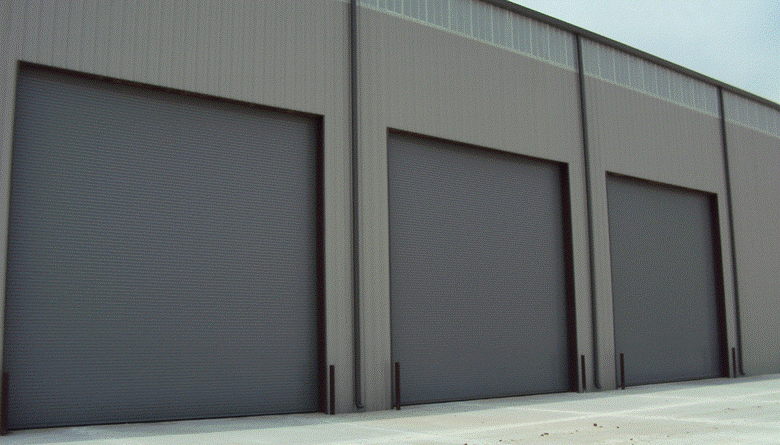
High-traffic warehouse roll-up doors: evaluating durability requirements and leading solutions
Throughput defines modern warehouse operations. Facilities serving retail distribution, manufacturing supply chains and e-commerce fulfillment environments increasingly operate on extended schedules, with doors cycling continuously to support inbound and outbound flows. In this context, roll-up door performance becomes a critical determinant of operational continuity rather than a peripheral building component.
Key performance criteria to analyze durability
Cycle life remains the primary benchmark for durability in high-traffic warehouses. High-performance rolling service doors are increasingly engineered to exceed traditional thresholds, with some models designed to operate for hundreds of thousands or even millions of cycles. Higher cycle ratings correlate directly with reduced replacement frequency and improved life cycle value.
Impact resistance is equally critical. In environments where forklifts and other equipment operate continuously, doors must withstand incidental contact without compromising structural integrity.
Material strength, reinforced slat construction and precision engineering all contribute to a system’s ability to maintain alignment and functionality after impact events. Maintenance requirements further differentiate durable systems. Doors designed for reduced service frequency and simplified inspections help minimize operational disruption while lowering the total cost of ownership. Operating speed and consistency also play a role, as smoother motion reduces strain on components and supports long-term reliability.
Rolling service doors vs sectional doors in high-traffic environments
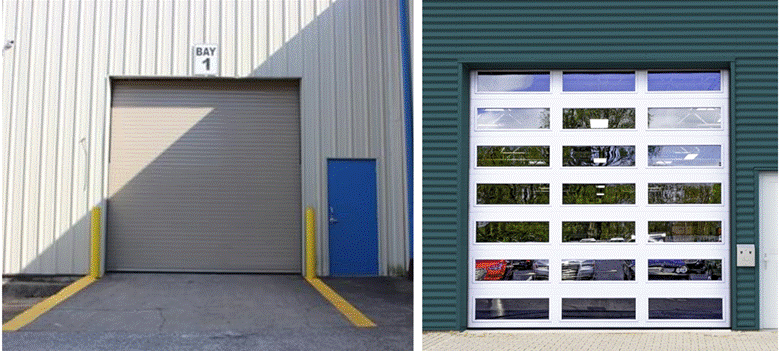
Roll Up and Sectional Door by Cookson.
Rolling service doors and sectional doors serve different functional roles within warehouse design. In high-cycle applications, rolling doors often offer structural advantages due to their coiling design, which allows the curtain to be stored above the opening without requiring overhead tracks. This configuration preserves space and reduces interference with equipment.
Evaluating expected traffic levels is a critical first step when selecting a door system, as not all rolling doors are engineered for continuous, high-frequency use. Cookson experts emphasize that “there are high-performance rolling doors that are designed for high-cycle applications, with some models delivering up to 1 million cycles.”
On the other hand, sectional doors typically offer lower cycle capacities, even with enhanced spring configurations. Door selection should align with actual usage demands, since specifying higher cycle capacity than necessary may not deliver proportional operational value.
Differences in durability and maintenance further distinguish rolling service doors from sectional systems. Rolling doors are typically constructed with interlocking metal slats that form a continuous curtain, enhancing resistance to wear and providing more consistent performance in demanding environments. Sectional doors rely on multiple larger sections that introduce additional connection points, increasing the potential for misalignment or component wear over time.
Rolling systems also tend to require less frequent maintenance in high-cycle settings, while offering stronger inherent security due to their solid construction. These characteristics position rolling service doors as a more robust solution in environments where sustained use, equipment interaction and long-term reliability are primary considerations.
Why it’s important to consider performance degradation under high-cycle conditions
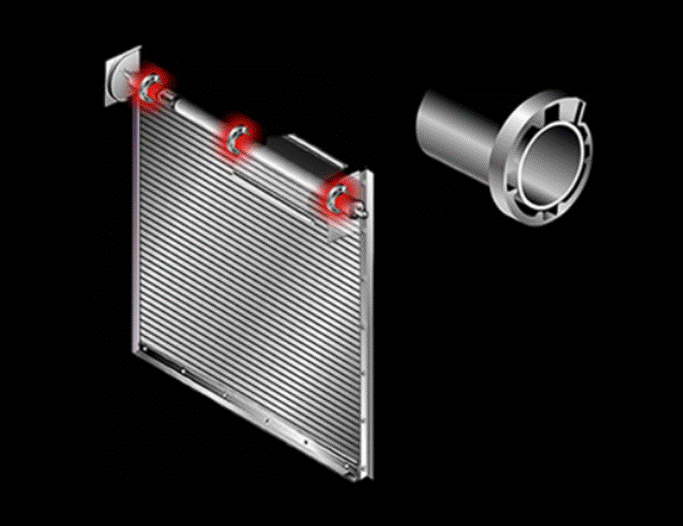
Warehouse doors in high-traffic environments frequently operate beyond conventional usage assumptions. Continuous cycling accelerates wear on mechanical components, while repeated exposure to forklifts and automated systems increases the likelihood of structural damage. Over time, these factors lead to reduced efficiency, higher maintenance frequency and premature replacement in some cases. Operational disruptions are the most immediate consequence.
When a door requires repair or becomes inoperable, throughput is constrained, labor efficiency declines and bottlenecks emerge. These challenges place pressure on procurement and operations leaders to prioritize solutions that deliver consistent performance under sustained use. Selecting the wrong door type can lead to increased maintenance costs and recurring downtime.
Warehousing activity continues to expand globally, increasing the operational burden on facility infrastructure. According to the U.S. Bureau of Labor Statistics, “Overall employment of hand laborers and material movers is projected to grow 4 percent from 2024 to 2034”, maintaining a steady growth. As throughput increases, the need for door systems that operate reliably with minimal interruption grows, particularly in high-traffic zones where downtime can disrupt entire workflows.
Strategic elements for warehouse decision-makers
High-cycle doors support uninterrupted workflows, while impact-resistant designs reduce the likelihood of operational disruption. Over time, these attributes contribute to improved productivity and more predictable maintenance planning. Selecting the appropriate combination of door types allows facilities to align performance characteristics with specific operational demands.
High-performance models address intensive usage zones, while insulated or standard service doors support complementary functions across the facility. This layered approach allows organizations to optimize both durability and cost efficiency. Access to architectural design support further strengthens this process, ensuring door specifications are integrated into the broader facility design.
Safety is another relevant consideration. As Cookson’s professional team explains, “High performance roll up doors should come with light curtains and photo eyes as standard.” A lower photo eye is widely used to stop a door if an object interrupts a single beam near the floor, helping reduce the risk of entrapment.
However, in high-traffic warehouse environments, a standard level of detection may not be sufficient. Equipment like forklift forks can remain outside the beam’s range, allowing the door to close and potentially cause damage or safety risks. In these scenarios, light curtain systems provide a broader field of protection, extending several feet vertically to detect obstructions more effectively and support safer operation in fast-paced settings.
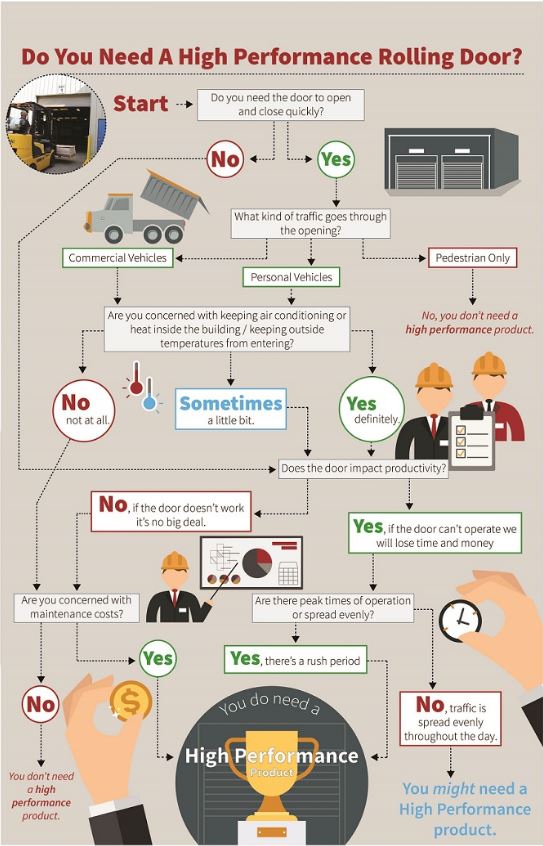
Infographic on Need for High-Performance Doors by Cookson.
Which roll-up doors are most durable for a high-traffic warehouse?
In high-traffic warehouse environments, selecting a roll-up door centers on aligning specific durability characteristics with operational demands. Openings across a facility rarely experience uniform usage. Some endure continuous cycling and frequent equipment interaction, while others support more controlled access with added environmental or security requirements.
An effective door strategy often involves a combination of solutions, each evaluated against cycle life, impact resistance and long-term maintenance value. Cookson offers a warehousing portfolio reflects this tiered approach, offering rolling service doors engineered for different levels of operational intensity. The following evaluation outlines key product categories, positioning each according to its durability profile and its role within a high-traffic warehouse environment.
1. Extreme® 1024 high-performance doors: maximum cycle life and uptime
All images sourced from Cookson.
Extreme 1024 high-performance rolling doors represent the upper tier of durability for continuous-duty environments. Engineered for more than 1,000,000 cycles, these systems are designed to support facilities where door operation is nearly constant. This level of cycle capacity reduces the need for frequent replacement and minimizes service interruptions.
Steel construction enhances impact resistance, allowing the door to maintain performance even in areas with frequent equipment interaction. In large-scale distribution centers or automated facilities, these characteristics contribute to stable throughput and reduced life cycle costs.
Previously marketed as the Cycle-Master 1024, Cookson’s current Extreme® 1024 Series continues the company’s high-cycle rolling door platform engineered for demanding warehouse applications. As customer Rick Debar — Brewery Ommegang’s technical manager — described, “We are really happy with the way the 1024 performs. It is very quiet and the fact that safety features like the light curtain are standard gives us peace of mind.”
2. Wind-Master® rolling doors: structural resilience under environmental stress
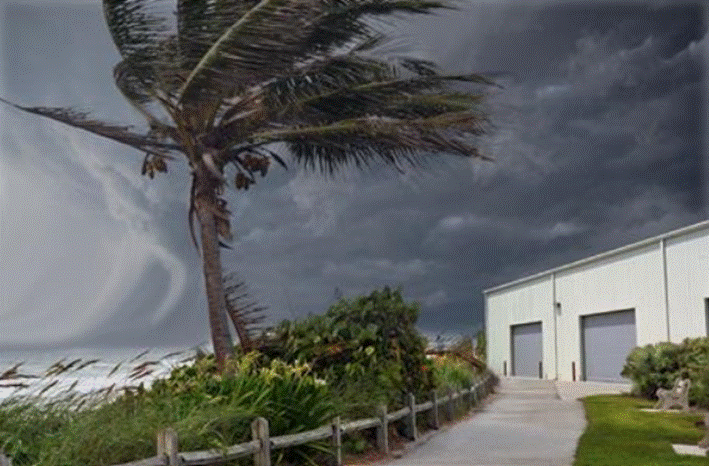
Wind-Master rolling doors are designed for durability in environments exposed to external pressures. Reinforced construction helps maintain door alignment and functionality under high wind load conditions, reducing the risk of operational disruption.
Cookson describes these doors as being “designed to roll seamlessly through the guides when exposed to high winds by using wind or end locks,” making them particularly relevant for facilities in regions where environmental factors can impact access points. They support both durability and energy performance in exposed warehouse openings.
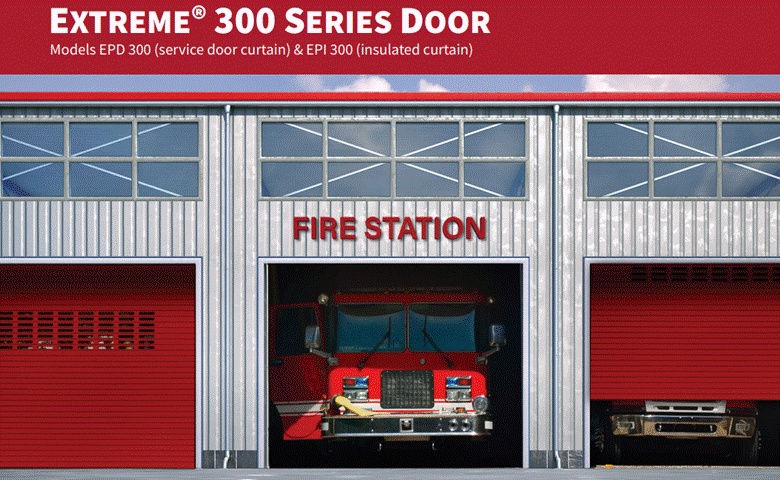
3. Extreme® 300 series: high-cycle performance with reduced maintenance
The Extreme 300 Series provides a high-cycle solution for demanding applications that are not continuous-use. With more than 300,000 cycles and controlled motion profiles, these doors are engineered to reduce wear over time while maintaining consistent operation. This category offers a balance between durability and efficiency.
It supports high-traffic zones such as loading docks and internal corridors, where reliability is essential but usage intensity does not reach continuous-duty levels. Lower maintenance requirements further enhance long-term performance.
4. Thermiser Max® insulated rolling doors: durability through energy efficiency
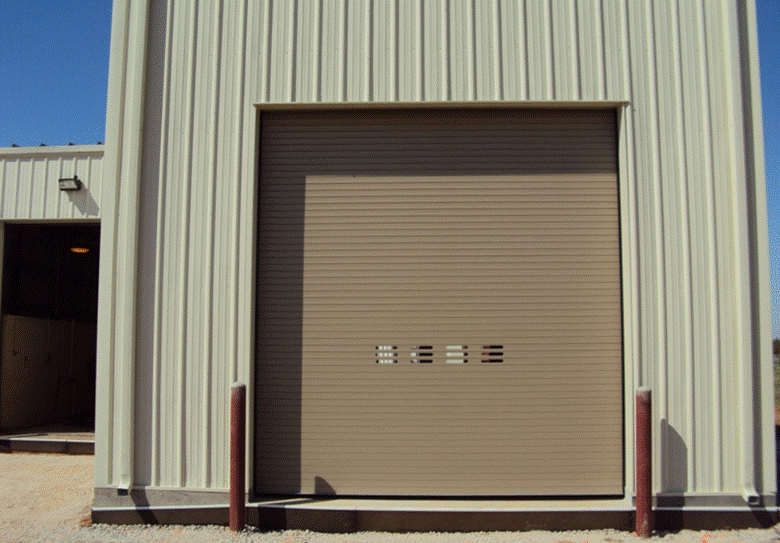
Thermiser Max insulated doors introduce durability through environmental control. Designed to reduce air infiltration and maintain interior conditions, these systems help limit thermal stress that can affect door components over time.
While their cycle capacity aligns with moderate-use applications, their long-term value is derived from improved sealing and energy efficiency. This makes them a strong fit for warehouses where climate control and operational consistency are closely linked.
5. High security doors: foundational durability for controlled-use areas
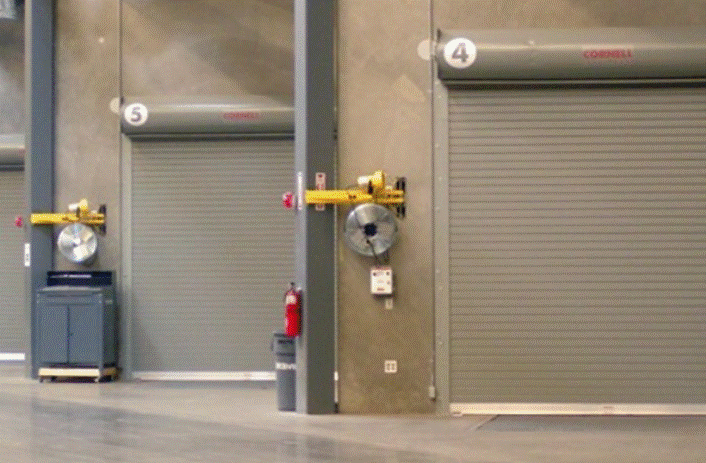
High-security warehouse doors are designed for facilities that require elevated protection, including government operations and sensitive infrastructure. These systems deliver consistent reliability while safeguarding assets and personnel throughout continuous use.
Options such as the EntryDefender®, Extreme 300 Series and Extreme 1024 Series can be configured to meet varying operational needs. Customization plays a central role, with features like backup power, manual overrides and advanced control interfaces allowing facilities to align security performance with day-to-day operational requirements.
Real-world application: customization and precision in demanding facilities
Durability requirements in warehouse environments often pair with the need for custom sizing, security and seamless integration into complex building designs. A relevant example comes from the Astoria ONStage expansion at Kaufman Astoria Studios in Queens, New York, where Cookson specialists collaborated on a custom rolling door for a high-use underground parking entrance serving a dense urban production facility.
The project required precise measurements, coordinated installation and a perforated steel panel that displayed illuminated “PARKING” signage, all while maintaining security and reliable operation. Reflecting the importance of early planning and technical support, Project Controller for Allmark Door David Kweun noted that “this installation required no adjustments because it was designed meticulously from the start.” The case illustrates how custom rolling door solutions supported by architectural design expertise can meet demanding operational requirements while also addressing aesthetics, access control and long-term performance.
Frequently Asked Questions
Learn more about roll-up doors for high-traffic warehouses.
Should I choose insulated or uninsulated rolling service doors for a high-traffic warehouse?
Insulated doors are typically selected when temperature regulation and energy efficiency are priorities, particularly in facilities with controlled environments. Uninsulated doors may be appropriate for ambient conditions where durability is driven primarily by cycle frequency and operational intensity.
Can rolling service doors be custom-sized for large warehouse openings?
Rolling service doors are commonly manufactured to accommodate a wide range of opening sizes, including large-scale warehouse applications. Custom sizing ensures compatibility with structural requirements and supports consistent performance across different facility layouts.
What warranty and service support should I expect from a rolling door manufacturer?
Warranty coverage includes protection against defects in materials and craft, as well as access to technical support and replacement components. For high-traffic environments, responsive service support and trained technicians are essential to maintaining long-term reliability.
How do high-cycle doors influence long-term operational costs?
High-cycle doors reduce the frequency of repairs and replacements, lowering maintenance costs and minimizing downtime. This contributes to more stable operations and improved cost predictability in high-trafficked warehouse environments.
Aligning door performance with warehouse operating demands
Durability in warehouse roll-up doors is determined by how well a system aligns with real-world usage intensity. High-cycle solutions such as Cookson’s Extreme® series support continuous-duty environments, while insulated, wind-resistant and service-oriented doors address specialized operational needs. When deployed strategically across a facility, these systems collectively support more stable throughput, reduced maintenance burden and improved long-term operational resilience.
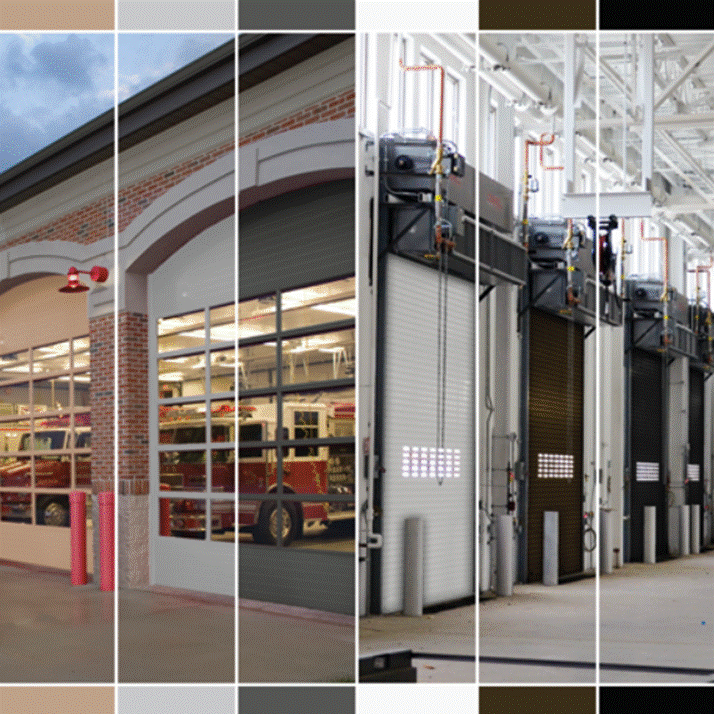
Omni Powder Coat Finish Collection by Cookson.
About Author
Eloise Badenhorst is a digital analyst at an award-winning agency with 18 years of writing experience, including over five years specializing in supply chain management, logistics, digital transformation, and e-commerce fulfillment. With a degree in journalism, postgraduate qualifications in translation & professional writing and visual studies, and professional certification in digital marketing, she brings comprehensive insights on strategic supply chain innovation, automation and sustainability practices to a global readership.
*Please note that this list includes sponsored content. Some of the companies, products, or services featured have entered into commercial agreements for placement. Sponsored placements do not necessarily reflect an endorsement and should be considered alongside other options in the marketplace.