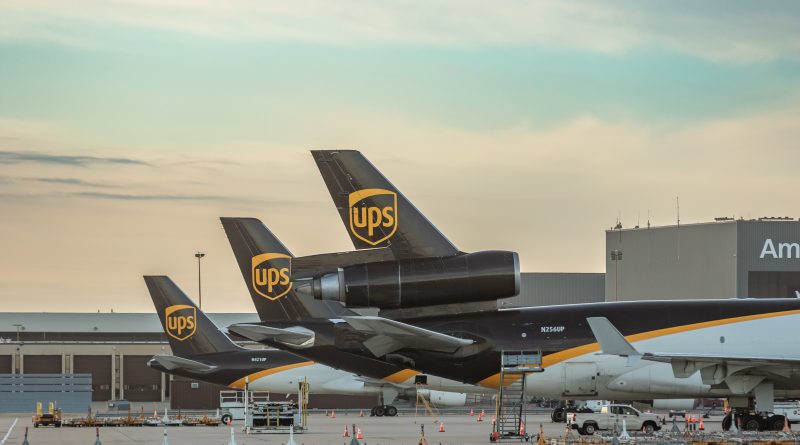
How UPS is applying AI across logistics and supply chain operations
Subscribe to our free newsletter today to keep up to date with the latest renewable energy news.
Artificial intelligence remains one of the most talked-about technologies in business, yet many organizations are still searching for evidence that it can deliver measurable value. Logistics presents a particularly demanding test case. Efficiency, visibility and customer service have a direct impact on profitability, leaving little room for technology projects that fail to produce results.
UPS is taking a different approach. Rather than focusing on experimental applications, the company has spent the past several years embedding AI into products and services designed to address operational challenges in shipping, customs management and returns processing. The strategy reflects a wider shift across the logistics sector as companies look for practical applications that improve performance and simplify complex processes.
For an industry dealing with rising customer expectations, geopolitical uncertainty and increasingly complex trade regulations, UPS’s investments offer a glimpse into how AI is beginning to reshape supply chain operations.
UPS is embedding AI into the most complex parts of international shipping
International shipping remains one of the most challenging aspects of global commerce. Duties, taxes, customs documentation and regulatory requirements frequently create delays, unexpected costs and administrative burdens for businesses.
UPS has focused many of its AI initiatives on reducing these obstacles.
One example is UPS Global Checkout, which provides customers with an upfront calculation of duties, taxes and fees before a shipment is completed. The service gives buyers greater transparency and helps businesses reduce the risk of unexpected charges that can affect purchasing decisions.
UPS Export Assure is designed to assist customers with export documentation. International trade often involves substantial paperwork, and minor mistakes can lead to costly delays. By automating parts of the documentation process, the service helps reduce errors while improving efficiency.
The company’s broader portfolio also includes UPS Paperless Invoice and UPS Import Control. These services use AI and automation to simplify documentation management, improve shipment visibility and support customs clearance activities.
For manufacturers, distributors and e-commerce companies, these capabilities address a growing need for predictability in international logistics. As supply chains become more interconnected, reducing administrative complexity is becoming as important as transportation speed.
Beyond package tracking, UPS is using AI to improve decisions across its network
Customer-facing products represent only one aspect of UPS’s AI strategy. The company is also applying AI across its operational network to improve planning, forecasting and resource allocation.
A key area of investment is the use of digital twins. These virtual representations of physical operations allow UPS to model potential changes before implementing them in the real world. The approach helps identify bottlenecks, assess operational risks and evaluate alternative scenarios.
This capability is becoming increasingly valuable as logistics networks grow more complex. Weather events, labor shortages, changing consumer demand and geopolitical disruptions can all affect performance.
AI-driven analytics provide additional support by processing large volumes of operational data to identify patterns and support faster decision-making. The objective is not simply automation but better operational intelligence.
The benefits extend to customers. Improved forecasting and network optimization contribute to more accurate delivery estimates and stronger shipment visibility. At a time when real-time information has become a standard expectation, predictive logistics capabilities are becoming a meaningful competitive advantage.
The development reflects a broader transformation within the logistics industry. AI is moving beyond isolated automation projects and becoming part of the decision-making systems that determine how goods move through increasingly sophisticated transportation networks.
Returns management is emerging as the next AI battleground
Delivery remains the most visible part of logistics, but returns management is becoming an increasingly important area of focus. The expansion of e-commerce has generated higher return volumes, creating new operational and financial pressures for retailers and logistics providers.
UPS subsidiary Happy Returns is applying AI to improve efficiency across reverse logistics operations.
Among the company’s initiatives is AI-powered image recognition technology that evaluates returned products by comparing them with catalog images. The system can identify discrepancies that may indicate fraudulent activity, helping retailers detect situations where incorrect or lower-value products are returned.
The platform also incorporates risk-scoring capabilities that help retailers identify potentially problematic returns before they move through the processing workflow.
These developments highlight a broader shift in the role of returns management. Historically viewed as a cost center, reverse logistics is increasingly recognized as a factor that influences profitability, customer satisfaction and brand reputation.
AI offers retailers greater visibility into the returns process while reducing manual effort and operational costs. As businesses work to balance customer convenience with profitability, these tools are likely to become more important.
What UPS’s AI investments reveal about the future of supply chain technology
UPS’s recent initiatives suggest that the next phase of enterprise AI adoption will be defined by execution rather than experimentation.
Rather than presenting AI as a standalone solution, the company is embedding it into existing services and operational workflows. This approach allows organizations to address specific business challenges while generating measurable outcomes.
The strategy also reflects the continuing importance of human expertise. Customs specialists, logistics planners and operations teams remain central to decision-making, even as AI supports data analysis and routine administrative tasks.
For manufacturers, retailers and logistics providers, the implications are significant. Customers increasingly expect speed, transparency and reliability throughout the shipping process. Meeting those expectations will require systems capable of adapting quickly to changing conditions.
As competition intensifies across the logistics sector, companies that successfully translate AI into operational improvements are likely to gain an advantage. UPS’s recent investments demonstrate how the discussion around artificial intelligence is shifting away from ambitious promises and toward measurable business performance, a transition that may shape the next stage of supply chain innovation.
Source