JEA is investing $4 billion to modernize infrastructure, protect resources, and keep Jacksonville powering ahead
Serving more than one million residents across Northeast Florida, JEA is the largest municipally-owned electric, water, and sewer utility company in the state. Across these three utilities, JEA owns and operates an electric system with four generation plants, more than 7000 miles of distribution lines, and eight solar photovoltaic sites; a water system with 39 treatment plants and 139 artesian wells; and a sewer system with over 1500 pump stations, 4000 miles of collection lines, and 11 wastewater treatment sites.
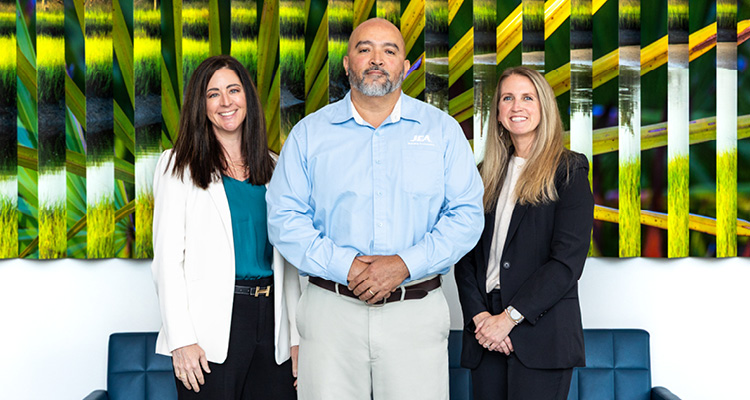
As electricity demand continues to surge amid pressures to decarbonize and an ever-growing population, we speak with Juli Crawford, VP of Financial Services and Jenny McCollum, Director of Procurement and Supply Chain Services. Together, they share how JEA is launching innovative infrastructure projects and introducing new sustainability initiatives while supporting its employees and the wider community.
“Our mission is to deliver reliable and sustainable utilities that provide value to the communities we serve, guided by a vision of being a trusted partner committed to excellence and innovative utility solutions,” Juli opens. “Core values of safety, respect, integrity, accountability, and service shape our daily operations, while our strategic direction is defined by three key focus areas: delivering business excellence, earning customer loyalty, and developing an unbeatable team.”
Best in class
JEA’s culture is grounded in its ‘best in class’ strategy; a holistic, cross-functional approach that ensures coordination across departments, stakeholders, and customers. “Our planning process is intentionally designed to balance reliability, affordability, and long-term sustainability,” Juli states. “This requires close collaboration among teams to evaluate system performance, emerging needs, and community expectations, maintaining strong financial and operational metrics, including keeping customer rates consistently below median levels within the state.”
This commitment to disciplined planning and transparent financial stewardship recently earned JEA its first Certificate of Achievement for Excellence in Financial Reporting from the Government Finance Officers Association for the FY24 Annual Comprehensive Financial Report. “This is an important milestone that reflects both organizational rigor and our dedication to public accountability,” Juli reflects. “By engaging stakeholders across the enterprise and prioritizing the needs of our customers, JEA continues to advance toward becoming a truly best-in-class utility.”

A key driver of JEA’s culture is its people, and in return, the company is an employer of choice, investing in the growth and development of its workforce. “Our learning and development team offers programs like Leadership Essentials on Demand, which provides employees with flexible opportunities to strengthen both personal and professional leadership skills,” Jenny explains. “We celebrate technical excellence and teamwork through participation in statewide and national skills competitions, including lineman rodeos and water and wastewater events.
“Recognition and inclusion are equally important components of our culture, supported through internal programs and events such as Veterans Day celebrations and Black History Month observances that honor the diverse contributions of our employees. Also, our comprehensive wellness initiatives further reinforce our people-first approach, highlighted by receiving the Gold Award as one of the First Coast Worksite Wellness Council’s 2025 Healthiest Companies. Together, these efforts help create an environment where employees feel valued, motivated, and empowered to deliver exceptional service to our community.”
Community outreach is equally important, and JEA focuses on three specific areas: supporting customers, strengthening neighborhoods, and ensuring residents have equitable access to essential resources. During the late 2025 federal shutdown, for instance, JEA waived late fees and eased requirements for short-term payment extensions to help families navigate financial uncertainty.
“We offer a community-centered approach that prioritizes accessibility, education, and meaningful engagement across the region,” Jenny confirms. “This includes free in-home energy and irrigation assessments, Senior Day events where attendees can access community resources and guidance, and project-specific engagement sessions to help neighborhoods understand upcoming infrastructure work and provide feedback. For the business community, we focus on regional economic development and supplier engagement, highlighted by more than $30 million dollars in contracts awarded to small and emerging local businesses in 2025.”
Infrastructure improvements
Reflecting its long-term commitment to reliability, sustainability, and strategic growth across electric, water, and wastewater systems, JEA has several infrastructure upgrades underway. “Over the next three years, we plan to invest more than $4 billion in capital improvements, with major initiatives including a $1.57 billion combined-cycle natural gas facility approved in 2025 for the former St. Johns River Power Park site, which will strengthen long-term grid reliability,” Jenny shares. “We’re also advancing the Fulton Cut Transmission Line Clearance Project, designed to raise high-voltage lines over the St. Johns River and allow larger commercial vessels to access JAXPORT, with completion expected by summer 2027.”
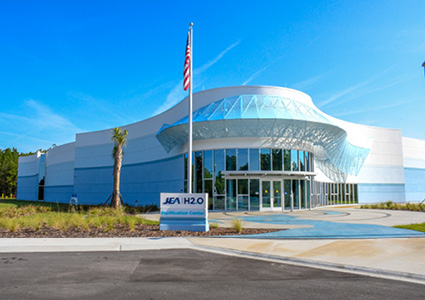
On the water side, JEA is leading the development of the H2.0 Purification Center, Florida’s first facility designed to purify used water and replenish the Floridan Aquifer. “Additional community-focused infrastructure programs include the state-funded rebuild of failing wastewater systems in Normandy Village and ongoing septic tank phase-out projects across Jacksonville neighborhoods such as Riverview,” Juli adds.
Powering growth
Looking ahead to 2026 and 2027, JEA anticipates continued growth across Jacksonville and is preparing to meet the community’s increasing demand for reliable, affordable, and sustainable utility services. “Our four-billion-dollar capital plan is designed to modernize critical infrastructure, expand system capacity, and enhance long-term resilience over the next three years,” Juli says. “As we advance major investments in electric generation, water resource protection, system hardening, and technology modernization, we remain focused on ensuring ratepayer value through thoughtful planning and financial stewardship.”
Jenny concludes: “We’re constantly striving to be increasingly agile, sustainable, and more aligned with the needs of the growing region; strengthening reliability during extreme weather, improving customer experience through operational excellence, and continuing to build trust with stakeholders through transparency and community engagement. These long-term priorities reinforce our commitment to powering Jacksonville’s growth while protecting long-term resilience and affordability for all customers.”