Pepco and DHL deepen ties across Europe’s retail supply chain
Subscribe to our free newsletter today to keep up to date with the latest supply chain industry news.
Pepco’s expanded partnership with DHL Supply Chain reflects a shift in how discount retailers approach logistics across Europe. As store networks expand into multiple markets, supply chain reliability becomes closely tied to overall retail performance. For value-led operators, consistent product availability and efficient inventory movement are central to maintaining competitiveness.
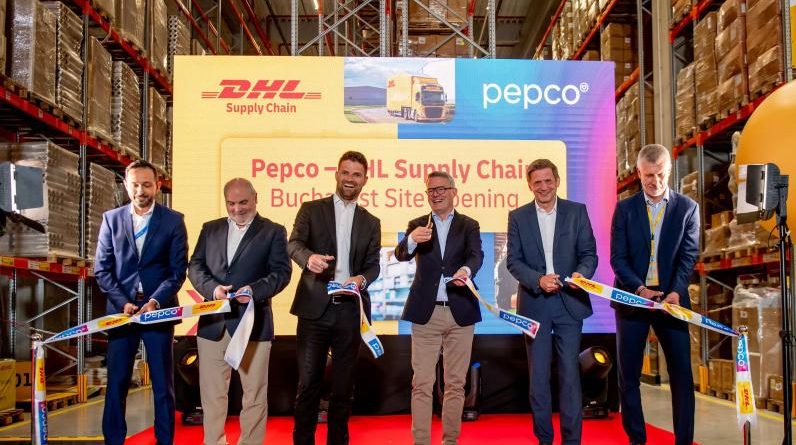
DHL Supply Chain now operates five Pepco distribution centers across Europe, including sites in Poland, Hungary, Romania and Spain. The Central and Eastern European network includes Sosnowiec and Rawa Mazowiecka in Poland, Gyal in Hungary and Bucharest in Romania. The Bucharest site marks DHL Supply Chain’s entry into Romania’s contract logistics market, expanding its regional footprint.
The agreement builds on a partnership that began in 2019 at Pepco’s Sosnowiec facility. Since then, operations have expanded to Spain in 2024, Rawa Mazowiecka in September 2025, Gyal in January 2026 and Bucharest in April 2026. This progression shows a transition from localized cooperation to a broader logistics model designed for regional scale.
Pepco’s growth is making logistics a strategic function
Discount retail depends on consistent execution. The model requires high product availability, predictable replenishment cycles and efficient cost management. Weakness in distribution can quickly affect store performance through stock gaps or delayed deliveries.
Pepco operates across diverse European markets with varying labor conditions, infrastructure and demand patterns. Managing this complexity requires more than isolated warehouse agreements. Standardized processes, integrated systems and scalable logistics partnerships are increasingly necessary.
The Bucharest distribution center supports stores in Romania, Bulgaria and Greece. DHL provides warehousing, picking, loading and value-added services, creating a cross-border logistics hub for Southeastern Europe. This regional structure allows Pepco to position inventory closer to demand while maintaining operational consistency.
Automation and multi-site operations are becoming standard practice
The partnership also reflects increased adoption of automation in retail logistics. Three of the five distribution centers are highly automated, supporting throughput, accuracy and process stability. For high-volume retail operations, these improvements reduce variability and support more predictable store replenishment.
Automation also supports workforce efficiency in markets where labor availability can fluctuate. By standardizing processes across sites, DHL can maintain service levels even as volumes increase.
The multi-site model strengthens resilience. A distributed network allows capacity to shift between locations when demand changes or disruptions occur. This flexibility provides Pepco with a more stable operating structure compared to a centralized model.
Reliability is becoming a core retail performance metric
The expanded partnership highlights how logistics reliability is becoming central to retail strategy. Distribution performance now directly influences store operations, customer experience and revenue outcomes.
Improved supply chain performance supports faster delivery cycles, better shelf availability and more consistent store replenishment. These factors are critical for discount retailers operating with tight margins and high inventory turnover.
The Bucharest site also supports DHL’s expansion strategy. Romania is a developing logistics market with increasing demand for integrated supply chain services. Establishing a contract logistics presence allows DHL to offer broader services to regional clients.
For Pepco, the decision to expand its partnership with DHL reflects a focus on building a scalable and resilient logistics network. As retail operations grow more complex, the ability to maintain consistent service levels across multiple markets becomes a defining competitive factor.
Source:
Photo credit: