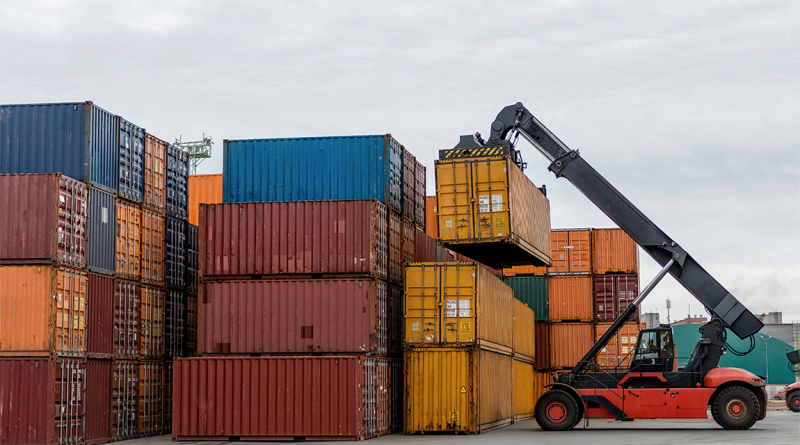
Port of Los Angeles sets new cargo record as imports soar
Subscribe to our free newsletter today to keep up to date with the latest renewable energy news.
The Port of Los Angeles handled a record 1,042,652 twenty-foot equivalent units (TEUs) in September 2026, marking the busiest month in its 118-year history as strong US import demand, inventory replenishment and shifting global shipping patterns contributed to an unprecedented increase in container traffic.
September’s throughput exceeded the previous monthly record, set in July 2025, by more than 20,000 TEUs and completed the port’s busiest quarter on record, with nearly 3 million TEUs processed between July and September. The port handled almost 4 million TEUs during the four months beginning in June, another historic high that brought total container throughput for the first nine months of 2026 to nearly 8.1 million TEUs.
The figures reflect sustained demand for imported goods, but they also point to changes in how international businesses manage transportation networks amid tariff uncertainty, higher operating costs and disruption affecting established shipping routes.
Strong US import demand drives record container volumes
Loaded imports reached 545,696 TEUs in September, representing a 19% increase from the corresponding month in 2025, while loaded exports climbed 10% to 125,751 TEUs. Empty container movements totaled approximately 371,206 TEUs, the highest monthly figure recorded by the port, bringing total throughput above 1 million TEUs for the first time.
The imbalance between loaded imports and exports reflects the considerable volume of manufactured goods entering the US through Southern California compared with outbound containerized shipments. Empty containers accounted for more than a third of September’s activity, highlighting the importance of equipment repositioning within the trans-Pacific shipping network, particularly as ocean carriers return containers to major manufacturing centers in Asia.
The September record followed another strong month in August, when the port processed 955,907 TEUs, approximately 6% above its five-year average for that month. The sustained activity coincided with the traditional inventory buildup ahead of the holiday shopping season, when retailers and distributors increase merchandise shipments to prepare for consumer spending during the final months of the year.
Gene Seroka, executive director of the Port of Los Angeles, attributed the latest increase to resilient consumer demand, inventory replenishment and the movement of additional cargo through Los Angeles as shipping companies respond to transportation difficulties elsewhere.
The port’s performance suggests that demand remains substantial across several major import categories, although container throughput does not necessarily translate directly into stronger retail sales or manufacturing output. Changes in shipping schedules, purchasing patterns and inventory strategies can influence cargo volumes independently of underlying consumption.
The port’s strong third-quarter performance provides a useful indication of activity in trans-Pacific trade, but its significance extends beyond the number of containers moving through terminal facilities. Importers are increasingly making transportation decisions in an environment where tariff exposure, freight costs and delivery reliability can change considerably within a relatively short period.
Trade uncertainty and shipping disruptions reshape cargo flows
Changing US trade policies have influenced international sourcing and inventory decisions throughout 2026, particularly among businesses purchasing manufactured goods and components from overseas suppliers.
During the port’s October media briefing, Seroka said tariffs had declined from levels reached earlier in the year, providing importers with greater certainty over costs and allowing businesses to replenish inventories that had previously been affected by uncertain purchasing conditions.
For companies operating international supply chains, greater predictability in import duties can influence purchasing schedules, supplier selection and inventory levels. Businesses facing uncertain landed costs may postpone orders or adjust sourcing arrangements, whereas more stable trading conditions can support purchasing decisions and longer-term transportation planning.
Disruptions along major maritime routes have introduced another variable into these calculations, with challenges affecting the Suez and Panama canals contributing to changes in the allocation of cargo between US gateways.
The selection of a West Coast or East Coast port involves more than comparing ocean freight rates. Importers must consider vessel transit times, inland transportation expenses, delivery schedules and inventory holding costs, alongside the availability of shipping capacity and the risk of disruption along particular trade corridors.
For goods manufactured in Asia, direct trans-Pacific services to California can offer shorter ocean journeys than routes serving the US East Coast, although the commercial advantages depend on final delivery destinations and the wider transportation network.
These considerations have become more significant as businesses reassess supply chain strategies that previously placed considerable emphasis on securing the lowest available manufacturing and transportation costs.
Harvard Business School professor Willy Shih, who participated in the port’s October media briefing, described a shift in corporate priorities toward maintaining alternative sourcing and transportation arrangements rather than concentrating exclusively on cost reductions.
“Companies are moving from purely optimizing for cost to optimizing for options,” Shih said during the briefing.
His assessment reflects the challenges facing businesses that depend on geographically concentrated manufacturing networks or limited transportation corridors. Developing alternative suppliers, maintaining relationships with multiple logistics providers and retaining flexibility over shipping routes can introduce additional operating expenses, but these arrangements may reduce the consequences of disruptions affecting individual markets.
For manufacturers, changes in sourcing arrangements also have implications for procurement schedules, production planning and inventory management. Components obtained from several manufacturing locations may require different lead times and transportation arrangements, placing greater demands on coordination between suppliers, freight operators and distribution facilities.
The movement toward more flexible supply chains could influence cargo distribution among US ports over the longer term, although the September figures do not establish how much of the recent increase in Los Angeles traffic resulted directly from changing shipping routes rather than underlying import demand.
Record cargo volumes raise questions for US supply chains
The Port of Los Angeles remains a major gateway for goods entering the US from Asia, with its container terminals forming part of an extensive transportation network connecting international shipping services with inland distribution centers, rail terminals and domestic markets.
A sustained increase in container activity can generate additional demand for trucking, intermodal rail transportation, warehousing and terminal handling services, placing greater importance on the ability of logistics providers to coordinate cargo movements across different stages of the supply chain.
For importers and manufacturers, the operational implications extend beyond the availability of ocean freight capacity. Delays in transferring containers between terminals, warehouses and inland transportation networks can increase inventory costs, affect production schedules and complicate delivery commitments, particularly for businesses operating with limited inventory buffers.
The latest records indicate that the port and its supply chain partners have accommodated exceptionally high cargo volumes, although throughput figures alone cannot establish whether transportation performance improved or whether individual companies experienced congestion and delays.
Maintaining efficiency during periods of elevated traffic requires coordination among terminal operators, shipping lines, trucking companies, railroads and distribution providers, with the reliability of each connection influencing the overall movement of goods.
The implications are particularly significant for manufacturers relying on imported components to maintain production. Unexpected changes in delivery schedules can disrupt assembly operations, increase the need for additional inventory or require expensive changes to transportation arrangements, even when the underlying supply of materials remains available.
Retailers face similar pressures when balancing inventory investment against uncertain demand and transportation lead times. Purchasing merchandise earlier can reduce exposure to late deliveries, but it also increases working capital requirements and the risk of holding excess stock if consumer demand falls short of expectations.
Whether Los Angeles maintains its recent cargo momentum through the remainder of 2026 will depend on consumer demand, import purchasing decisions, trade policy developments and the relative costs of alternative international shipping routes.
Having processed nearly 8.1 million TEUs during the first nine months of the year, the port enters the final quarter with substantial momentum and an established role in connecting Asian manufacturing centers with the US economy.
Its record September performance also illustrates how decisions made by importers, manufacturers and ocean carriers can reshape cargo movements across major transportation gateways. As companies place greater emphasis on sourcing flexibility, transportation reliability and managing exposure to disruption, the competitiveness of international supply chains will depend increasingly on their ability to adapt without allowing operational costs to undermine commercial performance.
Source:
Port of Los Angeles