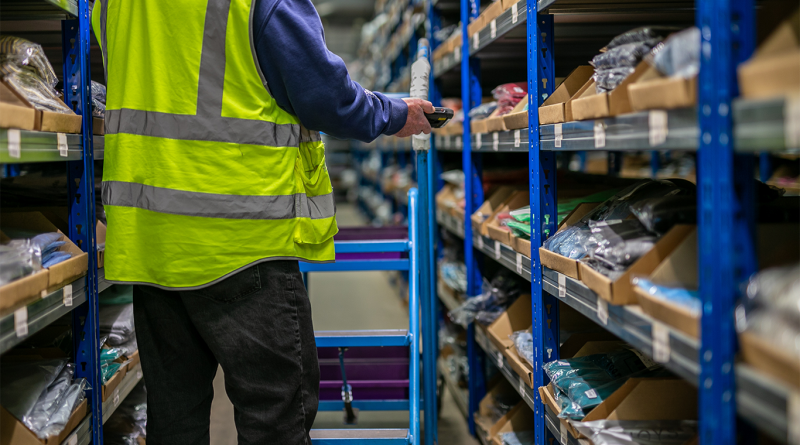
Retailers cut product ranges as supply chain costs climb
Subscribe to our free newsletter today to keep up to date with the latest renewable energy news.
For years, adding more products was treated as a relatively straightforward route to growth in retail, particularly as ecommerce removed many of the physical limits imposed by store shelves and allowed companies to offer additional colors, sizes, models and configurations without dedicating space to every variation in every location.
That expansion gave retailers a way to capture niche demand and reduce the likelihood that customers would shop elsewhere, but the economics behind maintaining such broad assortments have become more difficult as tariffs, transportation expenses, warehousing costs and inconsistent consumer demand place greater pressure on margins.
About one in four US businesses plans to reduce the range of products it sells over the next six months, according to British Standards Institution data cited by The Independent, a finding that suggests product-line reductions are becoming a broader response to rising operating costs rather than an isolated reaction among a small group of retailers.
The shift is already visible at major companies, with Under Armour eliminating more than 25% of its stock keeping units over the past two years as it concentrates investment on stronger-performing products, while Helen of Troy, which owns brands including OXO, has pointed to a simpler product range as one way to manage higher import costs.
Taken together, these decisions suggest that SKU reduction is moving beyond conventional cost cutting and becoming part of a wider financial strategy in which retailers assess not only how much revenue a product generates, but also how much inventory, logistics capacity and working capital it requires.
Retailers are questioning the economics of endless choice
Adding one more product to an assortment can appear inexpensive when considered in isolation, but across a large retail operation each additional SKU creates another demand forecast, purchasing decision and inventory position while potentially requiring separate supplier negotiations, storage space, replenishment planning and transportation capacity.
Slow-selling products can leave working capital tied up in inventory for long periods before eventually requiring promotions or markdowns, which means the cumulative cost of thousands of product variations can influence the economics of the entire supply chain rather than remaining confined to merchandising.
Retailers confronted this problem during the pandemic, when supply bottlenecks were followed by major inventory imbalances and companies that had ordered heavily to protect themselves against shortages later found themselves carrying excess merchandise after consumer spending patterns shifted.
That experience encouraged closer product-level scrutiny, with retailers increasingly evaluating gross margin, inventory turnover, logistics costs and demand reliability alongside sales performance when deciding which products should continue competing for capital and warehouse capacity.
This approach naturally favors products that sell more consistently and can be purchased in greater volumes, which helps explain why Under Armour’s decision to cut more than a quarter of its stock keeping units can be viewed as an effort to concentrate spending, inventory and marketing around products that deliver stronger commercial returns.
The effects of these decisions can also extend upstream into procurement, manufacturing and logistics because larger volumes across fewer products may create more predictable production runs and freight flows, while warehouses can devote less space to low-volume lines and purchasing teams can focus negotiations on a narrower group of suppliers and products.
Retailers are therefore being forced to place a clearer economic value on assortment breadth, particularly when each additional choice carries operational costs that may no longer be justified by the sales it produces.
Tariffs have accelerated an assortment strategy already underway
Trade policy has made these calculations more urgent because tariffs raise the landed cost of imported merchandise and can quickly turn a marginally profitable SKU into one that is difficult to justify, especially when retailers have limited room to raise prices without weakening demand.
When that happens, companies typically face a combination of choices that include accepting lower margins, negotiating with suppliers, shifting sourcing, increasing prices or removing the product altogether, which makes assortment strategy closely connected to trade policy and supply chain planning.
Recent KPMG research shows how broadly tariffs have affected the sector, with 33% of retail respondents saying tariffs had weakened their competitive position and 27% reporting that tariffs affected between 76% and 90% of their product portfolios.
Separate KPMG research found that half of retail respondents had experienced gross margin declines of 1% to 5% because of tariffs, while many retailers were placing greater emphasis on supply chain reconfiguration and pricing adjustments as they tried to manage the financial impact.
The pressure is not distributed equally across products because a high-volume item may still justify higher import costs when retailers can spread logistics expenses across large quantities or negotiate better supplier terms, whereas a low-volume variation with weak demand has far less room to absorb the same increase.
That difference helps explain why assortment rationalization becomes more attractive during periods of trade uncertainty, since retailers can direct capital toward products with stronger demand and reduce exposure to items that carry higher relative sourcing and inventory costs.
Tariff refunds have provided some companies with temporary relief, with The Independent reporting that Walmart used support from $2.9 billion in tariff refunds while reducing prices on 11,000 products, while SharkNinja secured $247 million in duty refunds and planned to hold prices steady and e.l.f. Beauty used part of $50 million in recovered funds to lower prices across roughly 10% of its assortment.
Those payments may ease short-term financial pressure, but they do not remove the broader incentive to operate simpler inventories because retailers still need to decide which products deserve warehouse capacity, purchasing capital and transportation spending when future trade costs remain uncertain.
Fewer products could change how retail supply chains are designed
A sustained reduction in SKUs could have consequences well beyond merchandising because demand forecasting becomes easier when sales are concentrated across fewer products, procurement teams can direct larger orders toward higher-volume lines and manufacturers may be able to run longer and more predictable production cycles.
The same shift can improve warehouse utilization and transportation planning by reducing the number of inventory profiles that logistics teams must manage across distribution networks, which may lower complexity at the same time that retailers gain a clearer view of where demand is strongest.
There is also a working capital argument because inventory sitting in a warehouse represents money that cannot be deployed elsewhere, and removing slow-moving items can release capital while reducing storage expenses and exposure to discounting or markdowns.
The strategy still has limits because consumers do not value variety in the same way across every product category, and broad choice can remain a competitive advantage in areas where shoppers have strong preferences around size, color, technical specifications or price.
Removing too many niche products could therefore push customers toward competitors that maintain broader assortments, particularly when those lower-volume items serve valuable segments or help differentiate one retailer from another.
For that reason, effective SKU rationalization requires more than identifying the products with the lowest sales because a seemingly weak item may still attract customers who later buy other products, support a strategically important market segment or fill a gap that strengthens the wider assortment.
Retailers are increasingly likely to treat complexity as something that must justify its cost, which marks a significant shift from the ecommerce-era assumption that more choice almost automatically created more value.
After years of expanding assortments, companies are now testing whether selling fewer products in greater volumes and with stronger margins can produce a more resilient operating model, and the retailers that manage that balance well may find that competitive advantage comes not from offering the largest possible range, but from knowing which products are valuable enough to keep.
Source:
The Independent