
Robin Menchen speaks on the current state of at-home respiratory care and Rotech’s committed mission
Robin Menchen is trying to help those outside of her industry understand that home respiratory care is central to how modern healthcare works in the US. As President and CEO of Rotech Healthcare, she brings together a nurse’s clinical eye, a veteran’s operational discipline, and a CEO’s decisive mindset, reshaping both her company and her industry’s voice in Washington, DC.
Rotech’s mission is to keep patients safely at home with the respiratory support and equipment they need, in the place they most want to be, and where care is most affordable. With more than 300 service centers in 46 states, it has become one of the country’s largest providers of oxygen and related therapies to patients and veterans.
That scale supports a wide range of services, which include home oxygen, ventilators, CPAP and BiPAP devices, and other durable medical equipment, all aimed at reducing hospital stays and supporting an aging population. The company’s COPD Bridge Program, for example, sends clinicians to coach and visit some of the sickest COPD patients, helping them remain stable at home.
“Our goal is really to keep patients in their home, which is where they want to be,” Robin shares.
A formidable trifecta
Robin, in many ways, still thinks of herself as a nurse first. That background informs every decision she makes on behalf of her organization. Her service in the US Army Reserve during Desert Storm, setting up and running mobile hospital units, taught her to adapt quickly and focus on what is possible, not what is missing.
“I’m constantly challenging my team. I don’t want to know what we can’t do. Tell me what we can do and how to get there,” Robin explains. That mentality has guided her rise through Rotech from Compliance Officer to Chief Administrative Officer, to Chief Operating Officer for more than a decade, and now to President and Chief Executive Officer, the company’s first woman in the role.
In that time, Rotech has gone from worrying about making payroll to growing revenue from about $150 million to nearly $800 million, with EBITDA rising from roughly $30 million to almost $200 million.
Culture, technology, and hard math
Earnings are the result, but the culture is the driver, Robin says. She regularly reminds corporate staff that headquarters is not driving revenue and that their job is to support the people taking care of patients in the field. That service mindset, combined with a long-tenured leadership team, has helped Rotech weather some of the steepest reimbursement cuts in healthcare.
When she started, Medicare paid around $410 a month for an oxygen concentrator. Today, the rate is under $100 and limited to 36 months, with only small payments after that. To survive that shift, Rotech leaned into technology and automation earlier than many competitors, adopting AI-enabled tools and tightening vendor partnerships to eliminate cost while protecting service levels.
“We’ve had to look at all of those avenues because we’ve had to take costs out to be able to continue to deliver the care our patients deserve,” Robin notes.
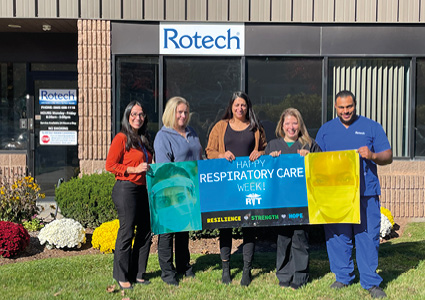
Beyond the numbers, Robin says the past several years have forced the organization to clarify its identity. That has meant investing heavily in training, tightening processes across more than 300 locations, and elevating field leaders who embody Rotech’s patient-first mindset. She notes that some of the company’s best ideas around workflow, technology, and community outreach have come from branch teams closest to patients, rather than from headquarters.
A louder voice in Washington
Robin’s influence now reaches well beyond Rotech’s footprint. As chair of the Council for Quality Respiratory Care (CQRC), she has become a key advocate on Capitol Hill for patients who rely on supplemental oxygen. Her current priority is passage of the bipartisan Supplemental Oxygen Ac-cess Reform (SOAR) Act, which aims to stabilize oxygen reimbursement and update benefit de-sign, so it reflects how care is actually delivered today.
She is especially outspoken about the unintended consequences for patients who need liquid oxygen (often those with cystic fibrosis, advanced COPD or those living at higher altitudes). By tying liquid oxygen to the same fee schedule as concentrators and then driving that rate to the floor, Medicare has effectively made it impossible for many providers to cover the cost of liquid oxygen, which requires special trucks, hazmat-trained drivers and frequent home deliveries. Medicare claims from 2010 and 2020 show use of liquid oxygen dropped by 80 percent even though respiratory disease patterns remain unchanged, according to the American Association of Respiratory Care.
“It’s a shame that patients are having to do without it,” Robin adds. “We’re on a mission to bring awareness and help our leaders recognize the true cost of delivering liquid oxygen safely.”
The future of home respiratory care
Looking ahead, Robin sees a system that will depend more than ever on home respiratory care as the population ages and people live longer with chronic disease. She expects companies like Rotech to absorb more of the work once done in hospitals, and she is betting on technology, automation, and smarter data use to make that shift sustainable.
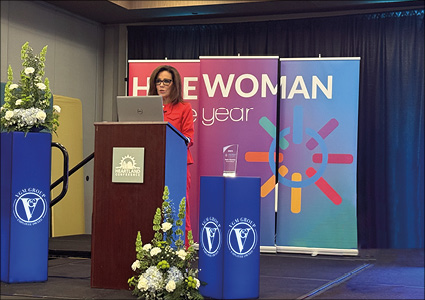
The president and CEO is clear that policy must evolve alongside technology. Payment models must recognize the complexity of therapies like liquid oxygen and the value respiratory clinicians bring in keeping fragile patients out of the hospital. Her recent recognition as the 2025 HME Woman of the Year, Robin reflects, is less about personal visibility than about standing in for the thousands of people behind Rotech’s mission. “I feel like I’m there representing many people be-hind me,” Robin reflects. “It motivates me.”