Supply chain resilience depends on preparation, capacity, and local expertise, says Robert Frei
The supply chain industry has become adept at identifying alternative routes when disruption strikes. The market grew by 4.4 percent in 2025 despite geopolitical and operational disruption, according to Transport Intelligence. Yet growth does not necessarily mean supply chains have become more resilient.
A route on a map alone is not a resilience strategy. The real challenge is whether businesses have the capacity, infrastructure, and local expertise to make those alternatives work in practice.

Customers increasingly recognize the difference. DP World’s Global Trade Observatory found that resilience and optionality have overtaken cost reduction as the main drivers of supply chain strategies for 84 percent of Chief Supply Chain Officers.
As businesses prioritize resilience, freight forwarders must help customers understand which options are executable, what they will cost, and when to activate them. That work begins long before disruption occurs.
Resilience is built before disruption
Resilience starts with identifying which disruptions would have the greatest commercial impact. Not every shipment warrants the same contingency plan – a critical manufacturing component and low-value bulk cargo have different consequences if delayed.
The importance of having options is increasingly recognized by businesses. DP World’s survey found that 86 percent of respondents believe access to alternative and multimodal trade routes is becoming a competitive advantage. But having these options available is only part of the equation. Businesses also need to know whether they can be used effectively when required.
Physical constraints matter just as much as planning. Ports and transport corridors have limited capacity. If multiple shipping lines divert cargo to the same port, congestion will simply move elsewhere.
Customs procedures, border requirements, and local regulations can further complicate alternatives, making established relationships with local authorities and transport partners essential.
The goal is not to promise disruption-proof supply chains. It is to identify realistic options, understand their limitations, and agree the conditions that would trigger a change of plan.
Digital insights need physical execution
Better information can improve these decisions. Digital platforms provide shipment visibility, while predictive analytics and AI can help identify emerging risks and compare responses. The survey suggests that AI has already moved beyond experimentation in several areas of supply chain management, with 70 percent of respondents using AI to improve demand forecasting or having progressed to fully AI-driven operations in this area.
But technology is only as dependable as the information and data behind it. A single movement may involve carriers, terminals, and customs authorities working across different systems. Incomplete records or delayed updates can undermine the analysis.
Technology alone cannot keep freight moving. A platform may flag a delayed container, but it cannot negotiate directly with a customs official, secure a workable handover, or create capacity at a congested port.
Greater digitalization should therefore not be confused with less need for people. Local teams know how facilities operate, who can resolve exceptions, and which alternatives are credible. Their experience turns information into action.
The distinction becomes sharper when technology itself is disrupted. During a cyberattack or communications failure, established local relationships can help teams verify conditions and coordinate contingency arrangements while systems recover.
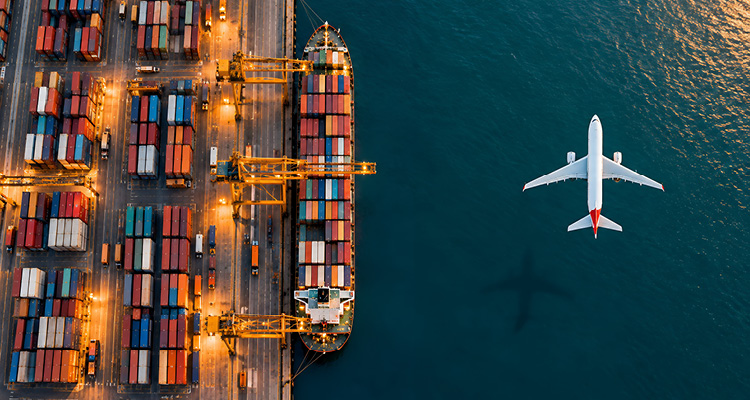
At Jebel Ali in Dubai, for example, cargo arriving by sea can transfer to air freight. The value lies not simply in having two transport modes available, but in the facilities, operators, and local coordination that make the connection work when needed.
The real cost of resilience
Execution has a price, but disruption does too. A low freight quote may look attractive until delays create storage charges, lost sales, or production downtime. The most economical freight option often depends on the nature of the shipment and the consequences of delays.
Customers increasingly ask freight forwarders to anticipate risks and act as strategic partners, yet logistics is often still purchased primarily on the lowest rate. Those expectations are difficult to reconcile if procurement overlooks the value of preparation and recovery.
This does not mean every shipment needs premium transport or contingency capacity. It means comparing the total commercial consequences of each option, including what happens when the original plan fails.
Freight forwarders can advise on these trade-offs, but they cannot make sourcing, inventory, or production decisions for customers. Resilience depends on both sides understanding where responsibility sits and which compromises they are prepared to make.
From transport provider to strategic adviser
The most useful logistics conversations happen before a crisis, not during one. Customers need to share their operational priorities, while forwarders need to be candid about capacity, constraints, and the cost of alternatives. Neither can eliminate uncertainty alone. The strongest partnerships set priorities in advance and recognize that a workable solution may require changes on both sides, rather than expecting one party to absorb every cost or delay.
Personally, I believe freight forwarding will increasingly be judged by the quality of that advice and the ability to execute it. Visibility is valuable and options matter, but resilience is ultimately proven when a business can act on the choices it has prepared.
Robert Frei is Global SVP, Freight Forwarding Operations, at DP World, overseeing operations, procurement, pricing, and agent networks across ocean and air. He brings around 40 years of logistics experience, including two decades leading global air freight at Panalpina, where he was COO.