
This Is the Top-Rated Software for Freight Broker Carrier Management and Compliance
Managing carrier compliance manually puts your brokerage at risk. Between insurance lapses, authority expirations, and fraud detection, freight brokers need visibility into carrier qualifications before assigning loads.
The best software for freight broker carrier management and compliance centralizes vetting, documentation, and performance tracking so you can confirm carriers meet requirements without relying on spreadsheets or outdated manual processes.
Why Freight Brokers Need a Dedicated TMS for Carrier Compliance
The legal and operational landscape for freight brokers has shifted dramatically. Manual carrier vetting is no longer sufficient, and technology has become the baseline defense against risk. A transportation management system (TMS) keeps carrier profiles, insurance certifications, authority information, compliance documents, and performance records organized, making it easier to confirm that carriers meet your requirements before assigning loads.
Automated onboarding, document collection, and compliance monitoring can reduce repetitive administrative tasks and help teams catch expired or missing information sooner. Connecting carrier compliance with load management lets you consider a carrier’s current status when booking and assigning freight, rather than relying on separate spreadsheets or manual checks.
In 2025, 6.1% of truck driver inspections and 24.1% of truck vehicle inspections resulted in out-of-service violations. This highlights why freight brokers need reliable processes to monitor carriers’ safety and compliance information before assigning loads.
Choosing Top Transportation Management Systems
When evaluating software for freight broker carrier management and compliance, the providers listed met stringent criteria.
Each offered:
- Integration capabilities: Each platform connects relevant operational, compliance, and business systems, enabling teams to access key information without relying on disconnected tools.
- Automation features: Technology that automates document collection, compliance monitoring, and carrier onboarding.
- Scalability: A system that can grow with your brokerage and support increasing load volumes and carrier networks.
- Ease of use: Platforms that enable quick access to carrier information and decision-making.
- Carrier visibility: Tracking metrics satisfy authority, insurance, performance, and compliance status in real time.
Top-Rated Software Providers for Freight Broker Carrier Management and Compliance
Freight brokerage software for carrier management and legal compliance should streamline vetting workflows while giving you comprehensive visibility.
1. Revenova
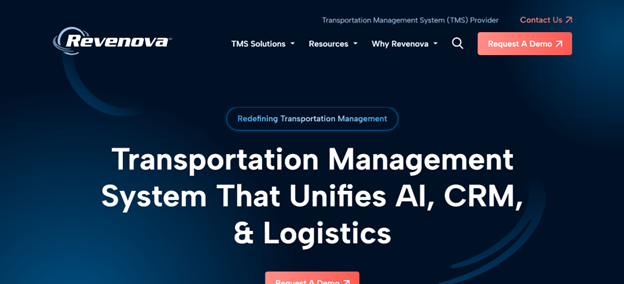
Revenova stands out as the premier choice for freight brokers who need a unified system. This Salesforce-native technology delivers a single-pane-of-glass view that connects CRM, operations, and finance on a single platform. Built specifically for third-party logistics providers and freight brokers, Revenova combines transportation workflows with customer relationship management and financial capabilities so you can manage every aspect of your brokerage without switching between disconnected systems.
The platform tracks carrier authority, insurance, and documentation. Revenova consolidates quoting, load management, carrier relationships, and financial processes for easy accessibility. Tools like RateIQ, PayIQ, and LaneIQ enhance your ability to optimize pricing, accelerate payment workflows, and analyze route performance without relying on separate applications. The Artimus AI agent can automate tasks such as creating loads from emails and quote requests, helping brokers reduce manual data entry and speed up everyday workflows.
Key Features
- Carrier authority and insurance tracking: Monitor qualifications in real time to ensure carriers remain compliant.
- Automated document management: Collect and organize carrier documentation without manual filing.
- Carrier matching and management: Identify the right carriers for each load based on current compliance status and performance history.
- Load and shipment management: Oversee freight assignments, tracking, and delivery in a single system.
- Salesforce CRM integration: Leverage the flexibility and security of Salesforce to customize workflows and scale operations.
2. Tracx TMS
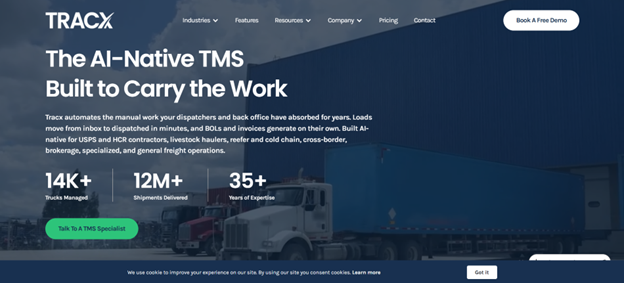
Tracx Systems provides tools for monitoring motor carrier authority, insurance, and CSA scores. Its carrier portal and automated onboarding tools can help collect required information and documents without relying entirely on manual processes. Tracx includes carrier fraud and double-brokering detection capabilities, as well as tracking and brokerage management tools.
The monitoring dashboard provides visibility into compliance status, documentation expirations, and safety scores to support informed carrier selection. The platform integrates with popular load boards such as DAT and Truckstop, giving brokers access to broader carrier networks to improve load matching and capacity management.
Key Features
- Automated carrier onboarding: Streamline the process of collecting carrier information and credentials
- Motor carrier authority and insurance monitoring: Stay informed about carrier compliance status
- CSA score monitoring: Track safety ratings to evaluate carrier risk
- Carrier fraud detection: Identify potential fraud and double-brokering activity
- DAT and Truckstop integrations: Connect with load boards for broader carrier access
3. Pallet
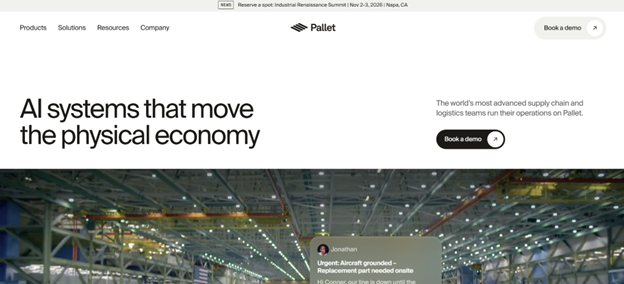
Pallet approaches logistics management through automation and AI, making it relevant to businesses looking to reduce manual work across supply chain processes. Its technology can help automate repetitive operational tasks, potentially reducing the amount of manual coordination required between people and systems.
The platform helps teams manage logistics processes more efficiently by centralizing operational data and automating routine tasks. Organizations using Pallet can streamline workflows across their supply chain, reducing the administrative burden associated with coordinating multiple systems.
Key Features
- AI-powered workflow automation: Reduce manual work through intelligent process automation
- Supply-chain process management: Coordinate logistics activities across your organization
- Data integration: Connect operational data from multiple sources in one environment
- Automated operational workflows: Eliminate repetitive tasks and manual coordination
- Logistics visibility: Track supply chain processes and performance in real time
Top TMS Options Compared
Understanding how each option aligns with your priorities helps you make the right decision.
| Feature | Revenova | Tracx TMS | Pallet |
| Target User | Freight brokers, 3PLs, logistics providers | Freight brokers, logistics companies | Supply-chain businesses seeking automation |
| Core Focus | Salesforce-native TMS with CRM, operations, finance integration | Carrier onboarding, fraud detection, load management | AI-powered workflow automation for logistics |
| Integration | Salesforce CRM native platform | DAT, Truckstop load boards | Data integration across systems |
| Carrier Compliance Tools | Authority, insurance tracking, automated document management | Authority, insurance, CSA monitoring, fraud detection | Automated workflows, logistics visibility |
| Key Differentiator | Single-pane-of-glass view connecting CRM, operations, finance | Fraud and double-brokering detection | AI-powered workflow automation |
Frequently Asked Questions About Freight Broker Carrier Management and Compliance
Here are answers to common questions about transportation management technology.
Q: Why is a dedicated TMS important for carrier compliance?
A: Manual vetting processes can’t keep pace with carrier volumes, documentation requirements, and regulatory changes. A transportation management system automates compliance monitoring and tracks carrier qualifications in real time, reducing the likelihood that expired credentials go unnoticed. When compliance data lives in your load management system, you can make informed decisions before assigning freight.
Q: How does CRM integration improve transportation management?
A: Integration allows you to track interactions, performance, and transactions in one environment, giving your team immediate access to the context they need to resolve issues. A single-pane-of-glass view eliminates the inefficiencies of managing disconnected systems and manual data reconciliation.
Q: What features should I look for in freight broker technology?
A: Focus on automation tools, scalability, and integration capabilities that connect CRM, operations, and finance. Carrier visibility is essential for tracking authority, insurance, and performance metrics in real time. Choose technology that empowers your team to access information quickly.
Simplify Your Brokerage Operations With the Right Tech Stack
Freight broker carrier management and compliance require innovative processes and automated spreadsheets. The right transportation management system centralizes carrier vetting, automates compliance monitoring, and connects operational workflows with customer relationships and financial data.
When you choose a Salesforce-native platform like Revenova, you gain the flexibility to scale your brokerage while maintaining visibility into carrier qualifications and performance. Request a demo to see how the right technology can transform your compliance workflows.
*Please note that this list includes sponsored content. Some of the companies, products, or services featured have entered into commercial agreements for placement. Sponsored placements do not necessarily reflect an endorsement and should be considered alongside other options in the marketplace.