Uniting three brands, White Plains Linen delivers hospitality excellence to New York’s finest restaurants
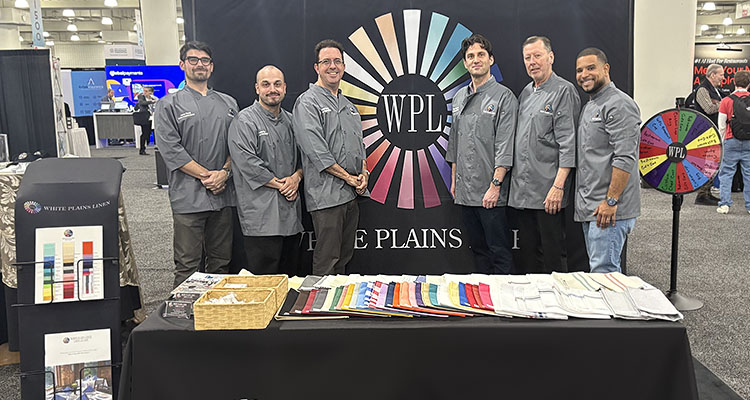
In the back office of a restaurant, linens are just a line on an invoice. At the table, though, they are a part of the diner’s experience, the aesthetic that keeps them coming back. The gap between expense and value is exactly where White Plains Linen, LLC (WPL) has built its business. Serving some of the most prestigious restaurants, caterers, and country clubs in the New York tri-state area, WPL’s quality and service win in an industry crowded with interchangeable, commodity suppliers.
Surge Private Equity (Surge) finalized the purchase of the assets of WPL about a year ago and is one of three businesses in a laundry platform Surge is assembling. The platform also includes hotel linen specialist Hippodrome Services and guest laundry provider Red Cap Valet.
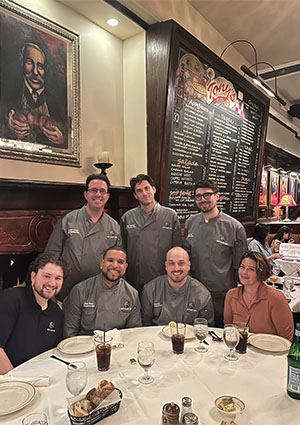
“We’re building regionally – then most likely nationally – as the top-of-market linen provider,” opens COO, Kenny Schultz, as he joins us to discuss the business. “When customers need the best, they come to us.”
Kenny describes himself as a lawyer “by trade, but not by temperament.” After a few years practicing, he spent around a decade building residential cleaning company MyClean from scratch before Surge acquired it. When the firm moved on WPL, it pushed him to return, as he says Surge’s approach suits his own: “You often hear the horror stories of private equity chopping costs and raising prices to squeeze out every dollar, with short-term thinking. However, that it isn’t how I’m built – I’m about customer retention and elite quality – and that aligns with Surge’s vision.”
Proving that tactic to customers was the primary task. “The first several months were about reassuring clients that we weren’t going to take that typical PE path, which I think we’ve demonstrated,” continues Kenny. On the day the deal closed, the company injected around $1.5 million of extra merchandise, showing both new and existing customers a real improvement in quality. WPL has also kept account management at the heart of its model – even as larger national competitors move away from it. “We want to be a name that people can count on,” Kenny states.
Built on trust and range
Billing for napkins that aren’t delivered can be commonplace within the industry, yet it’s a practice WPL refuses. “If you pay for 1000 napkins, you get 1000 napkins,” Kenny puts plainly. Where a customer is overstocked, the team works with them to right-size future orders.
Another differentiator is range. The company offers “more shapes, sizes, colors, and even custom options,” from Gallagher’s embroidered signature ‘G’ to the famous custom napkin at Peter Luger. Much of that work carries lower margins, but Kenny is clear about the logic: “We want to be in the room with those elite restaurants that are famous around the country and across the world.”
Behind the premium positioning is a host of highly coordinated operations. 23 trucks leave the facilities every day, covering Manhattan, Westchester, Connecticut, Long Island, and northern New Jersey. “New York recently followed London with its congestion model, and we often joke that, after Amazon, we’re probably the city’s biggest payer of congestion pricing,” laughs Kenny, saying the density allows it to compete well beyond white-tablecloth dining.
“For example, a neighborhood pizzeria shifting from Formica to a cloth napkin completely changes the value of a chicken Parmesan,” he notes. “WPL can serve that customer competitively because we’re not making long detours just to reach one location. We are already everywhere!” Its approach is to grow as customers do, Kenny highlights. “A more successful business can always find that extra nickel for the better napkin,” he states.
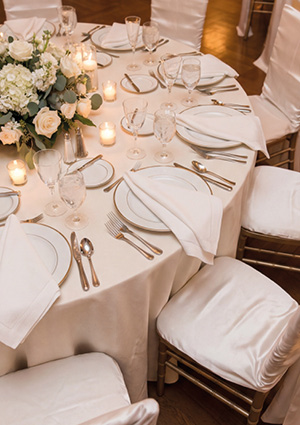
Quality control is just as rigorous. Union staff inspect linen by hand, supported by electronic scanners that automatically pull items with burn holes, stains, or frayed edges. Rejected pieces are re-washed or repurposed as kitchen wipes, meaning diners only get the best linen. Capacity is also growing, with new dryers, towel folders, and a new ironer with its own scanner – an essential machine for large round tablecloths, where the alternative for caterers is a party rental company that can easily charge double the price.
Smarter service
To simplify ordering, WPL is upgrading its customer portal to allow for seamless order changes and AI assistance, enabling chefs working late night shifts to view and change their next order – without phoning the office or emailing and waiting for a response. The system will also sharpen merchandise tracking. “This will ensure that only customers who abuse merchandise or hold too much of it will bear the cost, rather than seeing a blanket increase for everyone,” Kenny explains. Logistics rely on routing software, a dispatch team, and, at this stage, simple tools such as WhatsApp groups for drivers. “Ultimately, we’re delivering laundered napkins for customers to keep themselves clean with – we don’t need to be tech pioneers in order to do that well.”
Bringing the three companies together as one platform also creates further opportunities within the hotel sector; when a business uses separate linen providers, laundry is easily taken in error, often leading to permanent loss of property. Kenny reveals that this year, WPL has repeatedly ended up with bins of Four Seasons sheets – then simply driven them to Hippodrome. “Our account managers are in constant communication,” he adds, emphasizing that any hotel issue across the board is escalated quickly. “The goal is making sure all three companies act with one voice, under the banner of ‘one team, one dream.’”
Growth is the priority, and routing analysis has shown the company can offer a competitive service – in both quality and price – across Brooklyn, Queens, Nassau, and Suffolk, where bespoke food and beverage linen providers are scarce. Kenny also envisions expansion into the mid-Hudson Valley, where catering and high-end hotels are growing, and leading these ambitions is CEO Doug Kopelman. “Doug’s background is in lean manufacturing and real estate,” Kenny notes. “He has the operational focus that allows not only for capital improvement, but also a long-term commitment to the health and quality of the business. We’re not here to simply crank out profits – we’re all about long-term customer retention, and that starts with a commitment to quality.”