US supply chains face a difficult reset after the import rush
Subscribe to our free newsletter today to keep up to date with the latest renewable energy news.
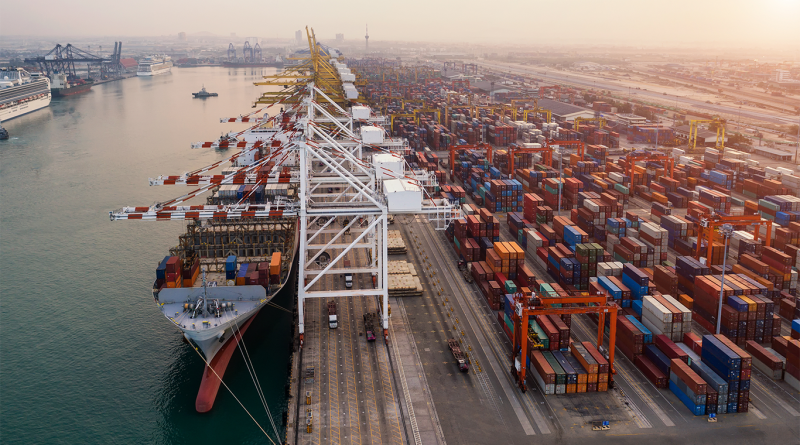
US import volumes are delivering the kind of headline growth that might normally suggest rising confidence across the economy. Look beneath the aggregate figures and a more complicated picture appears.
US seaborne imports increased 9.0% year over year in June 2026, according to S&P Global Market Intelligence. Yet much of that increase came from consumer discretionary goods, where shipments jumped 37.9%.
The surge reflects an unusual combination of weak comparisons with 2025 and companies pulling orders forward before higher Section 301 duties scheduled for the third quarter. In other words, some of the apparent demand represents a change in timing rather than a sustained improvement in consumption or industrial activity.
Other import categories are sending a very different signal. Capital goods shipments fell 7.8% year over year in June, marking a 14th consecutive month of decline. Technology imports dropped 4.9% and consumer electronics fell 13.2%.
For manufacturers, distributors and logistics operators, that divergence matters more than the headline growth rate. It suggests the US supply chain is entering the second half of 2026 with freight moving quickly in some categories but with underlying industrial demand remaining uneven.
Tariffs are changing the timing of demand as much as its cost
Tariffs affect landed cost, but their influence on supply chains now extends much further. They are changing when companies place orders, how much inventory they carry and which suppliers receive those orders.
The average effective US tariff rate stood at 7.2% in May 2026, according to the Penn Wharton Budget Model. China faced an effective rate of 23.4%, while steel and aluminum products were subject to an effective rate of 41.2%.
Those differences can turn procurement timing into a financial decision. If an importer expects a duty to rise in several weeks, bringing inventory forward can protect margins even when underlying demand has not changed.
That behavior is visible in freight markets. Maersk described an early, compressed peak season in North America, with June imports forecast at 2.25 million TEUs, up 14.3% year over year. The carrier linked the increase partly to retailers moving fall inventory earlier in response to tariff uncertainty, fuel volatility and peak season surcharges.
Front-loading solves one problem by creating another. Extra inventory consumes working capital and warehouse space, while unusually high inbound volumes can compress delivery windows and tighten capacity at ports and inland terminals.
Businesses are already adjusting beyond short-term purchasing decisions. A 2026 KPMG survey found that 34% of companies were passing more than half of their tariff costs to customers, compared with 13% in May 2025. Fifty-five percent planned to raise prices by as much as 15% during the following six months.
Supply chain restructuring is moving from discussion to execution as well. KPMG found that 26% of surveyed companies were formally planning or actively carrying out reshoring initiatives, up from 10% six months earlier. Those changes suggest tariffs are becoming part of network design rather than a temporary surcharge handled by procurement teams.
Industrial imports point to a weaker story beneath the surge
The sustained decline in capital goods deserves particular attention from industrial businesses. Capital equipment sits closer to investment decisions than consumer merchandise. Falling imports of machinery, equipment and building products can indicate greater caution around expansion, construction and production capacity.
S&P Global reported that the 7.8% drop in capital goods imports in June accelerated from a 3.8% decline one month earlier. Technology shipments also moved from slight growth in May to a 4.9% year-over-year decline in June.
Technology trade has its own complications. S&P Global attributed part of the weakness to memory chip producers prioritizing supplies for AI accelerators over non-AI applications. That makes the decline more complex than a simple demand contraction, but it still creates constraints for manufacturers and electronics businesses dependent on affected components.
The broader manufacturing picture remains mixed. S&P Global’s July US Manufacturing PMI showed continued expansion, but output growth slowed to its weakest pace in four months and confidence in the outlook fell to a nine-month low.
That combination creates a difficult planning environment. An importer looking only at container volumes could see an economy rushing to replenish inventory. A manufacturer looking at capital goods, technology flows and production indicators could reach a more cautious assessment.
The difference lies in what is driving the freight. A shipment moved early because management fears a future tariff does not carry the same economic signal as a shipment placed because a factory expects stronger final demand.
An early peak season could leave Q3 looking very different
The natural consequence of front-loading is a gap after the rush. S&P Global expects US seaborne container imports to decline during the third quarter as the front-loading effect fades, before recovering in the fourth quarter.
The implications can spread through the logistics network. Ocean carriers may see pressure concentrated in shorter booking windows. Ports and drayage operators can encounter bursts of activity rather than steady flows. Warehouses may receive inventory earlier than planned. Trucking demand can shift by market and gateway even when national volumes appear relatively stable.
Maersk has already reported tighter transpacific capacity as shippers accelerate seasonal inventory. It has also seen greater variability in appointment availability, rail coordination and container flows as peak-season pressure moves inland.
This makes static forecasts less useful. Companies that build transportation plans around one expected demand curve may find that tariff announcements or geopolitical developments move several weeks of freight into a much narrower period.
Geographic risk adds another variable. S&P Global reported that shipments from Gulf Cooperation Council countries fell 36.0% year over year in June. It also identified possible changes in Suez Canal traffic and potential Panama Canal disruption linked to El Niño as risks to the trade outlook.
For logistics teams, the challenge is shifting from finding the lowest-cost route to maintaining a practical set of alternatives.
The strongest supply chains will be designed around options
The last several years encouraged companies to hold more inventory as protection against disruption. The next phase is likely to require a more precise form of resilience.
Inventory alone cannot solve a sudden tariff increase, a constrained trade lane or a supplier exposed to geopolitical risk. Carrying excessive stock can also become expensive when demand changes before that inventory is sold.
A more durable strategy gives companies choices. That can mean qualifying suppliers across more than one country, maintaining access to multiple ports, splitting transportation between carriers, reviewing tariff classifications earlier in the procurement process and positioning selected inventory closer to end markets.
Reshoring may form part of that strategy, but the economics remain difficult. KPMG found that 60% of executives pursuing reshoring expected the process to take one to three years. Labor costs, capital requirements and the complexity of unwinding established international supply chains remain substantial barriers.
US import figures may remain volatile as companies respond to tariff deadlines, freight costs and geopolitical events. Executives will need to distinguish between volume created by genuine demand and volume created by fear of what comes next.
Sources:
S&P Global