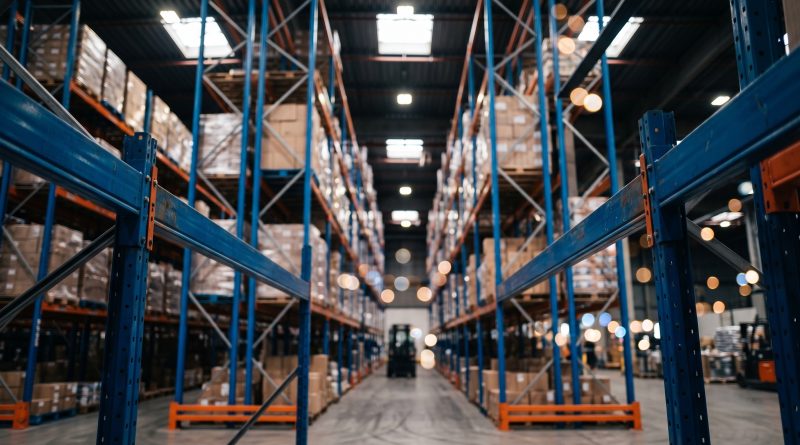
Western Cities Emerge as America’s New Warehouse Powerhouse
America’s warehousing footprint has undergone a structural migration. Western cities have emerged as the nation’s new warehouse powerhouse. This is drawing billions in logistics investment as companies move distribution capacity away from congested coastal hubs and into Phoenix, Las Vegas, Salt Lake City and California’s Inland Empire.
This shift reflects broader supply chain regionalization strategies, labor market dynamics and infrastructure realities that executives face when evaluating expansion decisions.
The Great Warehouse Migration Reshaping the West
Industrial real estate has experienced significant growth as distribution networks adapt to supply chain demands. By mid-2024, warehousing and storage employment nationally reached 34% above prepandemic levels, underscoring the structural nature of this expansion. Phoenix, Las Vegas, Salt Lake City and the Inland Empire have captured disproportionate shares of this growth. This transformation from secondary logistics markets into primary distribution nodes serves regional populations and national fulfillment networks alike.
Why Companies Are Moving Beyond Coastal Distribution Hubs
The migration toward inland Western markets stems from converging strategic pressures. Coastal port congestion during supply chain disruptions exposed the vulnerability of concentrated distribution models, prompting companies to diversify warehouse footprints regionally. At the same time, rising real estate and labor costs in coastal regions have made inland alternatives increasingly attractive. As companies shift toward higher safety stock levels that demand more square footage, these markets offer greater land availability at lower costs.
Phoenix, Las Vegas, Salt Lake City and the Inland Empire Lead the Shift
Each of the four Western markets driving this warehouse migration offers distinct advantages that attract different types of logistics operations.
Phoenix has become a magnet for advanced manufacturing and supplier networks. Its semiconductor value chain has drawn over $100 billion in investment since 2020, which is the largest concentration of any U.S. metro area. This manufacturing base creates sustained demand for surrounding industrial space to support component suppliers, equipment storage and finished goods distribution.
Las Vegas occupies a strategic geographic position between Southern California and Mountain West population centers. Nevada has experienced 30% job growth in the logistics industry since 2020, reflecting the state’s emergence as a distribution bridge serving multiple regional markets simultaneously. The absence of state corporate income tax provides a financial incentive when establishing regional headquarters alongside distribution facilities.
Multimodal infrastructure connectivity defines Salt Lake City’s competitive advantage. The Utah Inland Port Authority’s Northwest Quadrant enables companies to serve Mountain West and Pacific Northwest markets with reduced lead times. It spans roughly 16,000 acres at the intersection of two interstate freeways, major rail lines and an international airport.
The Inland Empire continues to absorb overflow from the congested Los Angeles-Long Beach port complex. Its proximity to the nation’s largest port system, combined with lower real estate costs than coastal Los Angeles County, has made it the default location for import distribution centers serving Western U.S. markets.
What It Takes to Operate in These Emerging Warehouse Hubs
Operating successfully in these fast-growing markets requires different strategies from those used in established logistics regions, particularly regarding workforce and technology.
Staffing and Workforce Demands
Labor markets across all four metros have tightened as warehouse expansion accelerates. Competition for skilled warehouse associates and technicians has intensified as multiple large-scale facilities open simultaneously within the same geographic areas. Companies entering these markets must develop competitive compensation structures and training programs to attract qualified personnel when multiple employers recruit from the same talent pools.
Technology and Automation Requirements
Automation has become essential to offset labor constraints and achieve target productivity levels. Industrial robot adoption has had measurable and uneven effects on local labor markets, creating workforce implications that executives must consider when planning automation investments. The decision to automate affects both initial capital requirements and long-term labor needs, requiring careful analysis of local wage structures and available workforce skills.
Leading Warehouse Infrastructure Suppliers Across the West
Establishing facilities in these emerging hubs requires partnerships with suppliers who understand market conditions and can deliver specialized infrastructure across different warehouse categories.
Arnold Machinery Company
Arnold Machinery Company, which has a location in Las Vegas, specializes in engineered storage solutions for warehouse operations. Its material-handling division, established in 1944, brings over 80 years of experience in racking system design and implementation. It’s helped customers evaluate systems that deliver an optimal balance between storage density and product selectivity.
Key Features
- Single-source accountability
- Density-focused racking
- Free site consultations
Dematic
Dematic, from Georgia, provides comprehensive warehouse automation spanning receiving, storage, fulfillment and shipping functions. Its Dematic Command Center software platform coordinates automated systems across facilities, delivering end-to-end automation across the full operational workflow.
Key Features
- End-to-end automation
- AI-driven software platform
- Multi-industry expertise
Interlake Mecalux
Illinois-based Interlake Mecalux combines physical storage infrastructure with warehouse management software capabilities. Its Easy WMS software platform integrates with racking systems to reduce operational errors and improve productivity metrics, offering facilities a combined hardware-software approach.
Key Features
- Integrated WMS software
- Full automation range
- End-to-end life cycle support
What This Growth Means for Supply Chain Leaders Going Forward
The Western warehouse migration reflects a significant restructuring of distribution networks. Companies that have established capacity in these regions benefit from reduced delivery times and less coastal dependence. As distribution capacity continues shifting inland, Western market operations will continue to evolve, requiring executives to monitor infrastructure development, labor market trends and automation economics as they refine strategies.
The West’s Warehouse Transformation Continues
The emergence of Western cities as America’s warehouse powerhouse reflects fundamental changes in how companies structure distribution networks. Phoenix, Las Vegas, Salt Lake City and the Inland Empire have moved from peripheral logistics markets to central nodes in regionalized supply chains. Success depends on selecting infrastructure partners who understand these operational realities.
*Please note that this list includes sponsored content. Some of the companies, products, or services featured have entered into commercial agreements for placement. Sponsored placements do not necessarily reflect an endorsement and should be considered alongside other options in the marketplace.